

President Donald Trump has found a new focal point in the debate over rising living costs: energy-intensive data centres. In remarks published this week, and analysed by YourDailyAnalysis, Trump argued that Americans should not shoulder higher electricity bills to subsidise the rapid expansion of artificial intelligence infrastructure, singling out Microsoft as the first company expected to adjust its approach.
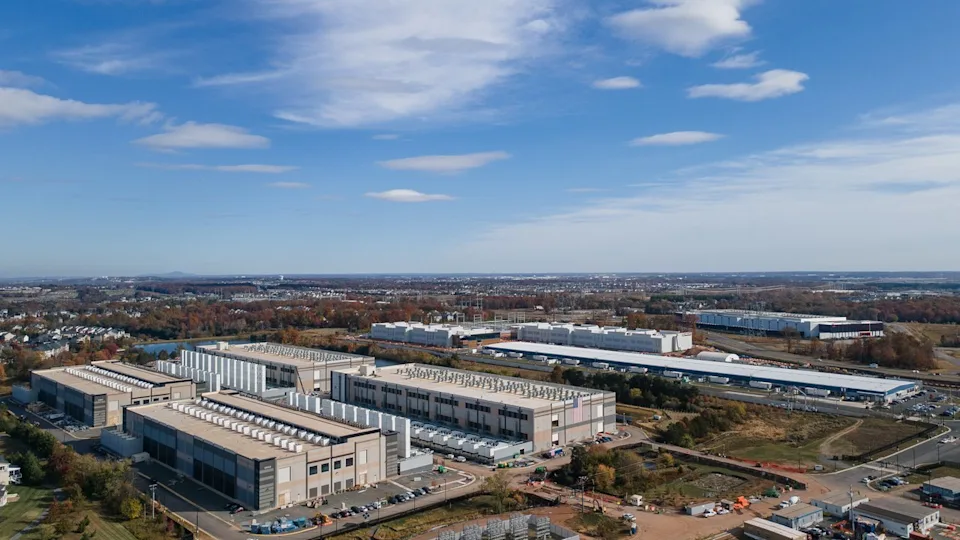
The framing is deliberate. Data centres – windowless, industrial-scale facilities that can consume as much power as heavy manufacturing – are being repositioned from abstract symbols of innovation into concrete contributors to household inflation. Trump’s message draws a clear boundary: AI may be strategically vital, but its energy footprint must not be socialised through residential utility bills.
Microsoft moved quickly to respond. The company announced a “community-focused AI infrastructure” initiative, committing to cover the full cost of electricity required for its data centres, including grid upgrades such as transmission lines and substations. It also pledged to work with utilities and regulators to establish tariffs that reflect true system costs, explicitly stating that those expenses should not be passed on to ordinary consumers. Similar commitments were outlined for water usage, another growing source of local resistance.
From a corporate strategy perspective, this is a pre-emptive recalibration. As YourDailyAnalysis has noted in prior assessments of hyperscale infrastructure, AI investment is increasingly colliding with physical constraints rather than digital ones. Power generation, grid expansion and permitting timelines operate on multi-year horizons, while AI capital expenditure follows quarterly earnings logic. That mismatch is now becoming politically visible.
Electricity prices have already been rising at a pace households feel immediately, making power costs one of the most politically sensitive components of inflation. At the same time, the surge in data centre demand is beginning to show up in national emissions data, as utilities lean on existing fossil-fuel capacity to meet near-term load growth. This combination – higher bills and higher emissions – creates a pressure point that neither regulators nor politicians can ignore.
Trump’s intervention reflects this tension. By placing responsibility on data centres rather than utilities or trade policy, he is offering voters a simple narrative: rising electricity costs are not inevitable, and they should not be borne by households. Whether that promise is technically achievable is secondary to its political utility. As YourDailyAnalysis sees it, the deeper issue is distribution – who pays for grid expansion when demand growth is driven by a narrow set of extremely large users.
That question is already being contested at the local level. Communities are pushing back against new data centre projects over land use, water stress and energy pricing, turning AI infrastructure into a zoning and permitting battleground. Project delays and cancellations are increasingly common, underscoring that social acceptance has become as critical as capital availability. Technology firms are responding by experimenting with demand-response agreements, on-site generation, long-term power procurement and, in some cases, nuclear energy partnerships. These strategies aim to position data centres as active participants in the energy system rather than passive loads. But each option raises costs, extends timelines or introduces regulatory complexity, placing pressure on margins and growth assumptions.
What Trump described as “serious changes” is unlikely to translate into a single policy lever. In practice, it points toward a structural shift: specialised tariffs for hyperscale users, upfront financing of grid assets by AI developers, tighter regulatory scrutiny and greater expectations that computing demand must be flexible during peak periods. The risk lies in timing. If clean generation and grid capacity cannot scale fast enough, the short-term solution defaults to whatever power is already available – often the most carbon-intensive. That creates a conflict between affordability, climate commitments and system reliability, with no easy resolution.
As Your Daily Analysis concludes, the real test is not whether Microsoft or any single company can absorb incremental costs. It is whether the United States can redesign its energy and regulatory framework quickly enough to support AI’s industrial expansion without triggering consumer backlash or emissions regression. If that balance fails, the AI boom may increasingly be defined not by innovation, but by its economic and political side effects.