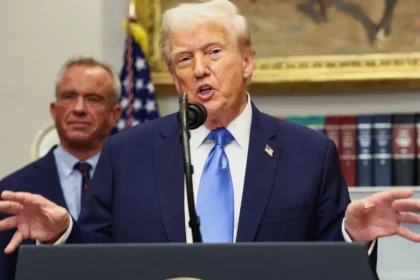

Renewed political uncertainty in Washington has kept currency markets on edge, reinforcing pressure on the U.S. dollar even in the absence of major shifts in monetary conditions. Over the weekend, President Donald Trump threatened to impose 100% tariffs on Canada should it deepen trade ties with China, while Democratic leaders signaled opposition to a government spending bill, reviving concerns over fiscal brinkmanship. As YourDailyAnalysis observes, the combination of trade threats and budget risks has reintroduced political volatility as a standalone driver in dollar pricing.
The significance of these developments lies less in their immediate implementation and more in the widening range of perceived policy outcomes. Extremely aggressive tariff rhetoric, even if unlikely to be fully enacted, expands the market’s assessment of downside scenarios. This, in turn, increases the incentive for investors to reduce unhedged exposure to U.S. assets. According to YourDailyAnalysis, such dynamics often emerge when policy signals become abrupt and reversible, forcing markets to price uncertainty rather than fundamentals.
The dollar’s vulnerability has been compounded by the prospect of rising currency hedging among foreign investors. When global asset managers increase hedge ratios on U.S. equity and bond holdings, the resulting dollar selling can become persistent rather than episodic. This mechanism tends to exert sustained pressure on the currency, particularly when paired with stabilizing forces in traditional safe havens such as the Japanese yen. YourDailyAnalysis highlights that these flow-driven effects can outweigh short-term interest rate considerations.
Official messaging has done little to fully reassure markets. While U.S. authorities continue to emphasize commitment to a “strong dollar” policy, the distinction between currency levels and policy intent has become increasingly blurred for investors. Statements suggesting that the dollar’s exchange rate is not a direct policy objective may reduce expectations of active support during periods of weakness. In currency markets, this ambiguity can translate into a higher tolerance for volatility and a greater willingness to hedge.
An additional layer of risk stems from the possibility that markets interpret policy coordination – whether real or perceived – as acceptance of looser global dollar conditions. If such expectations coincide with a restrained response from the Federal Reserve, they could accelerate short-term dollar depreciation. This sensitivity reflects how quickly sentiment can shift when confidence in institutional consistency is questioned.
Taken together, recent developments suggest that the dollar is being treated less as a pure reflection of economic strength and more as a proxy for political credibility. Near-term movements are likely to remain volatile as markets navigate overlapping trade, fiscal, and central bank considerations. From the perspective of Your Daily Analysis, the key risk is not a single policy decision but the cumulative impact of unpredictable signals, which can prompt structural adjustments in hedging behavior and portfolio allocation.