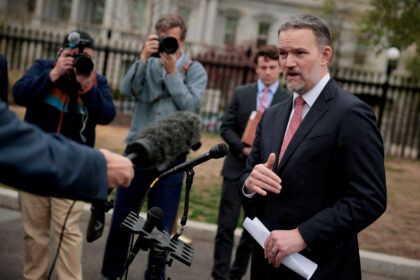




The renewed call to dismantle U.S. immigration enforcement agencies reflects a broader shift in how coercive state power is being debated in domestic politics. Recent remarks by New York City Mayor Zohran Mamdani have pushed the slogan “Abolish ICE” back into national discourse, not as a detailed policy blueprint, but as a political signal tied to growing public discomfort with enforcement tactics. As YourDailyAnalysis frames the issue, the debate is less about institutional abolition and more about legitimacy, oversight, and public trust.
Criticism intensified following a series of widely circulated enforcement videos and a fatal incident involving an immigration officer, which triggered protests and amplified scrutiny of agency conduct. These events have accelerated opinion shifts faster than aggregate statistics ever could. High-visibility incidents function as emotional catalysts, transforming procedural concerns into moral judgments and forcing political actors to take sharper positions. The risk is that rhetorical escalation narrows the space for incremental reform by collapsing complex governance questions into binary choices.
Polling trends illustrate this tension. Recent surveys show a clear rise in public dissatisfaction with immigration enforcement methods, alongside increasing resistance to practices such as officers concealing their identities during arrests. At the same time, opinion remains deeply polarized along partisan lines. YourDailyAnalysis notes that this configuration turns immigration enforcement into a mobilization issue rather than a persuasion issue, energizing bases while hardening opposition among undecided voters.
Within the Democratic coalition, the slogan itself remains contested. Strategists and policy-oriented groups have warned that calls to “abolish” federal agencies risk alienating voters who support border control but oppose excessive force. The political cost lies not in advocating reform, but in adopting language that implies institutional dismantlement rather than procedural correction. This internal debate reflects a broader strategic dilemma: how to signal moral urgency without surrendering electoral ground.
The federal response has emphasized security framing. President Donald Trump has defended aggressive enforcement while acknowledging operational errors, reinforcing a narrative that equates agency authority with public safety. This framing has proven resilient, particularly when tied to crime prevention. From an analytical standpoint, the asymmetry is clear: security narratives are simpler to communicate than governance reforms, giving enforcement advocates a structural messaging advantage.
Importantly, the feasibility gap remains large. Immigration and Customs Enforcement is a federal body, and local leaders possess limited authority beyond restricting cooperation or applying political pressure. As Your Daily Analysis observes, calls for abolition function primarily as symbolic positioning rather than executable policy. This reinforces the likelihood that the practical outcome of the current debate will center on constraints, oversight mechanisms, and transparency rather than institutional dissolution.
The broader risk is cyclical radicalization. Escalating rhetoric on one side incentivizes counter-escalation on the other, producing a feedback loop that sidelines pragmatic solutions. In such an environment, moderate reforms – clear use-of-force standards, mandatory identification, independent review processes – struggle to gain visibility despite broad latent support.
The most plausible near-term trajectory is sustained political pressure without structural abolition. Public opinion trends suggest rising intolerance for opaque enforcement practices, increasing the probability of procedural reforms even in a polarized environment. From the standpoint of YourDailyAnalysis, the durability of immigration enforcement policy will depend less on slogans and more on whether institutional accountability can be strengthened without eroding the state’s capacity to enforce the law. The debate around ICE has become a proxy for a larger question: how democratic systems reconcile enforcement power with legitimacy under sustained political stress.