


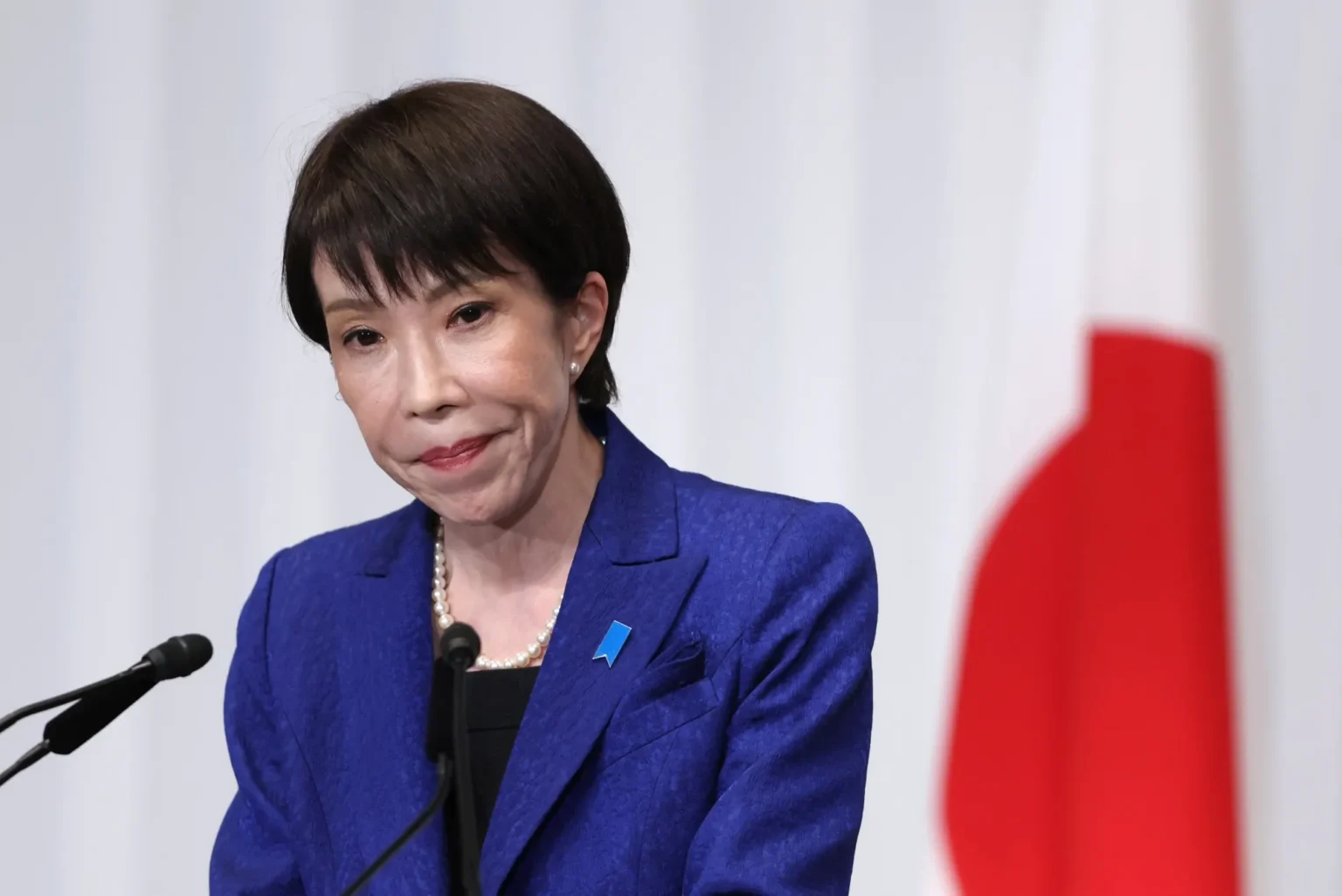
China’s Ministry of Commerce announced on Monday that it was adding 20 more Japanese organisations to its export control list, imposing a general ban on Chinese exports that can serve both commercial and military purposes. A parallel measure placed another 20 entities on a monitor list, subjecting them to stricter scrutiny for any dual-use imports from China. The additions double the number of Japanese entities subject to curbs since February, when Beijing initially targeted 40 firms in retaliation for comments made by Japanese Prime Minister Sanae Takaichi last year. Takaichi had suggested Tokyo could deploy its military if China attempts to seize Taiwan, a self-ruled democracy that Beijing claims as its own territory. She has refused to withdraw those comments. YourDailyAnalysis frames the entire sequence – comment, sanction, escalation – as a structured coercion campaign rather than a proportionate diplomatic response.
The new control list targets are not random. They include the state-run National Institute for Defense Studies, military systems research centres, and affiliates of Mitsubishi Electric and Mitsubishi Heavy Industries – companies at the core of Japan’s defence industrial base. The monitor list expansion draws in Mitsui E&S, whose shares briefly fell as much as 3% before recovering after the announcement. YourDailyAnalysis spots the extraterritorial clause as the most legally novel element: the order bans any overseas entity from supplying the listed Japanese companies with dual-use technology of Chinese origin, attempting to extend Beijing’s enforcement reach well beyond its own borders. How that would be enforced in practice remains entirely unclear.
Hiroshi Namioka, chief strategist at T&D Asset Management in Tokyo, noted that the export controls had been anticipated to some extent and were already on investors’ radar. The market reaction bore that out: Mitsubishi Electric fell 1.4%, Mitsubishi Heavy was up 1.9%, and the broader shock was absorbed without a major selloff. But contained equity reactions should not be mistaken for contained economic exposure. YourDailyAnalysis surfaces the rare earth dimension as the more serious long-term constraint: China dominates the global rare earth supply chain, and Beijing has been choking shipments of some rare earth elements and other critical minerals to Japan in recent months. Firms are eating into stockpiles and scrambling for alternatives. That pressure does not show up in a single day’s stock chart.
Bloomberg Intelligence analysts Ian Ma and Yoshiteru Ito provided the clearest sectoral read of the risk: China’s export controls will likely intensify supply-chain vulnerabilities by making rare-earth exposure a tighter constraint for Japan’s defence sector. Their analysis notes the controls are sharpest where defence hardware uses rare-earth permanent magnets – motors, actuators, radar, guidance systems, missiles, and naval hardware – because substitution requires considerably more time than a procurement adjustment.
The paradox embedded in all of this is the trade data. Despite the escalating sanctions, the total value of Chinese exports to Japan rose 7% to almost $69 billion in the first five months of this year. The increase is especially surprising given that Chinese shipments of mineral fuels and fertilizers to Japan dropped due to the Iran War. Commercial ties persist even as the political and military dimension deteriorates. George Chen, partner for Greater China practice at The Asia Group, offered the clearest analytical read: Beijing is increasing pressure on Tokyo to take visible steps toward improving ties. In the short term, Japan-China relations remain fragile – not yet stabilising, and at risk of slipping further if neither side moves to arrest the downward trend.
The cleanest read on the trajectory is this: Tokyo will not reverse Takaichi’s Taiwan comments; Beijing will not quietly abandon a coercion tool it has now deployed twice. Your Daily Analysis closes with the trigger variables to monitor: The next trigger could be Japan’s next scheduled defence spending increase, a coast guard incident near contested southern islands, or another parliamentary statement that Beijing categorises as remilitarisation. Takaichi’s administration has rejected those characterisations. The gap between the two governments’ definitions of acceptable speech is the variable that drives this escalation, and neither side shows any interest in closing it.