

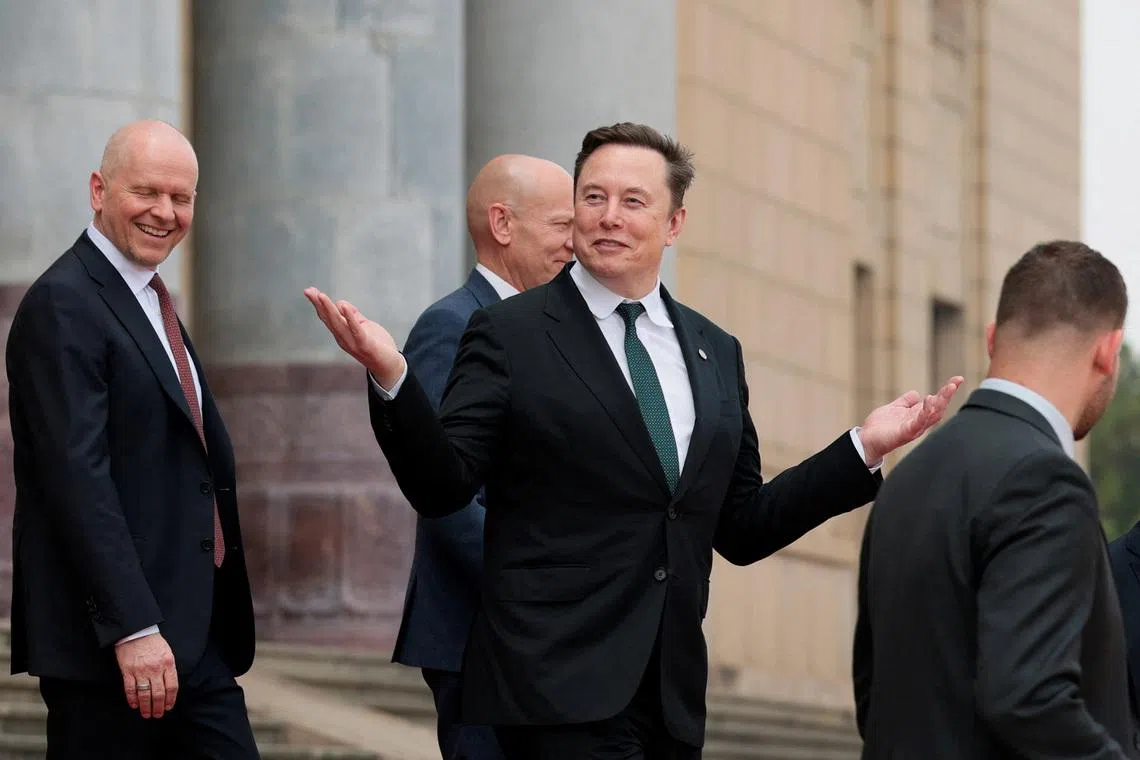
Elon Musk arrived in Beijing alongside a delegation of America’s most influential technology executives, and within YourDailyAnalysis the trip is viewed as a revealing measure of his standing in a country that once treated him almost as a folk hero. The visit will test whether a foreign entrepreneur can retain symbolic power in China after local companies have absorbed his methods and begun competing with him on increasingly equal terms.
Few international business leaders have built such a contradictory reputation in China. Musk has drawn admiration as an engineer and futurist, yet regulators and state institutions have repeatedly challenged him when consumer complaints and security concerns collided with Tesla’s expansion. His personal brand remains unusually strong, but it has always rested on a tacit understanding that enthusiasm in China lasts only as long as it serves national priorities.
The durability of Musk’s influence stems from the remarkable overlap between his ambitions and Beijing’s industrial goals. Electric vehicles, autonomous driving, robotics, satellite communications and artificial intelligence all occupy strategic positions in China’s long-term economic planning. YourDailyAnalysis regards that convergence as the foundation of Musk’s privileged status, since his companies operate in precisely the sectors Chinese policymakers consider critical to technological sovereignty.
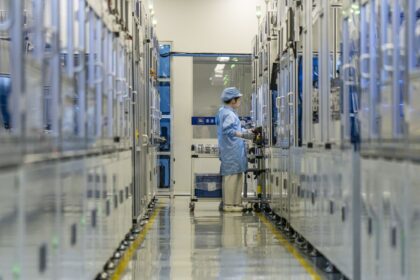
Tesla’s Shanghai factory stands as one of the clearest examples of mutual advantage. When China allowed Tesla to establish a wholly owned plant in 2018, it broke with decades of policy that required foreign carmakers to work through local partners. Tesla gained direct access to manufacturing scale and supply chains, while Chinese producers gained an unusually transparent demonstration of how software, batteries and production systems could be integrated into a new industrial model.
The educational value of that example turned out to be enormous. Domestic manufacturers studied Tesla’s architecture with extraordinary intensity, then adapted many of its principles to their own vehicles. YourDailyAnalysis interprets this transfer of know-how as Musk’s deepest impact on China – not the number of cars sold, but the acceleration of an entire generation of competitors now capable of matching or surpassing Tesla in cost and product development speed.
Outside the car business, Musk inspires more strategic caution. Starlink’s dominance in low-Earth orbit has underscored the military significance of private satellite networks, pushing China to accelerate alternative systems under its own control. At the same time, Musk remains dependent on Chinese suppliers for solar manufacturing equipment and continues to seek approval for broader deployment of Tesla’s self-driving technology.
Fame tends to outlast setbacks, but industrial leadership rarely remains uncontested. Chinese companies no longer treat Musk solely as an innovator to emulate; many now see him as a benchmark to overtake. Your Daily Analysis frames this moment as a quiet inversion of roles – the entrepreneur who helped shape China’s technological imagination may continue to command respect, even as the country he inspired becomes increasingly determined to eclipse him.