


In global trade, few negotiations reveal the intersection of economics, geopolitics and industrial strategy as clearly as the current dialogue between Taiwan and the United States. Taipei is not simply seeking a reduction of U.S. tariffs – it is navigating a delicate balance between deepening its partnership with Washington and protecting the technological assets that define its global influence. From our perspective at YourDailyAnalysis, this process illustrates how a relatively small economy can leverage world-class expertise to help shape the future of the semiconductor landscape.
Taiwanese officials set their intentions plainly during a recent parliamentary session: the goal is to bring the effective U.S. tariff rate down from roughly 20% to 15%. While the difference looks modest on paper, it carries strategic weight. As we note at YourDailyAnalysis, a 15% threshold is becoming a symbolic benchmark – Japan and South Korea have already secured similar arrangements as part of their broader investment partnerships with Washington. Taiwan, in turn, is positioning itself within the same emerging framework while ensuring it does not lose competitive ground.
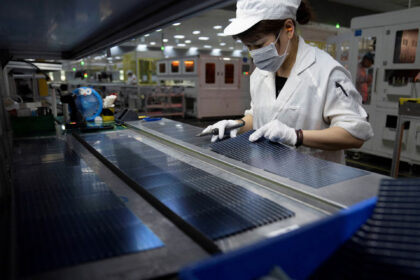
Simultaneously, a more sensitive strand of negotiations is unfolding. Washington has floated the idea of an agreement under which Taiwan – and particularly its leading technology firms – would expand investment in the U.S. and support the training of American workers in semiconductor fabrication and other advanced industries. Taipei responds with what it calls the “Taiwan model”: a strategy built on decades of developing science parks and technology clusters that underpin the island’s success. For the United States, this model represents a shortcut to accelerating its own industrial renewal. For Taiwan, however, it is a cautious blueprint – a way to export know-how without surrendering core competencies.
TSMC, the world’s largest contract chipmaker, has already committed around $165 billion to its multi-fab complex in Arizona. These investments have become a symbol of Taiwan’s willingness to participate in America’s semiconductor ambitions. Yet behind the headlines lies a more complicated reality: persistent labor shortages, high construction costs and the challenge of transplanting intricate manufacturing processes across borders. Taiwan’s economy minister has stated that the government could support workforce-training needs if TSMC requires assistance – but insisted that this is not a formal condition of the U.S. trade talks. At YourDailyAnalysis, we view this as a deliberate dual message: not a mandatory commitment, yet an option that remains strategically open.
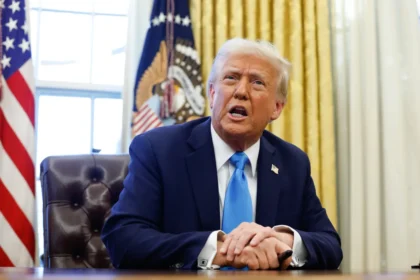
It is also relevant that exports of Taiwanese semiconductors are not subject to the existing 20% U.S. tariffs – Washington cannot afford to jeopardize access to the chips that power nearly every sector of its economy. Still, former President Trump’s comments on potential 100% tariffs on imported chips – with exemptions for firms producing in the U.S. or committing to do so – underscore how tariffs are being used as leverage. In practice, American officials have hinted that such extreme measures are unlikely in the near term. As we assess it at YourDailyAnalysis, this rhetoric is a negotiation tool rather than a firm policy trajectory.
Neither side has confirmed a timeline for finalizing the agreement, though Taipei has expressed hope to conclude talks by the end of the year. In reality, details may continue to shift until the last moment, especially amid the evolving political environment in Washington. What Taiwan seeks is stability; what the U.S. demands is commitment; and in between lies an industrial partnership that both sides must calibrate with precision.
Taken together, the contours of the negotiation reflect a dual strategic burden. For Taiwan, tariff reductions are not merely about export competitiveness – they are part of a larger strategy to preserve its technological leverage. For the United States, securing Taiwanese investment is not just economic policy – it is a cornerstone of its broader effort to rebuild domestic semiconductor capacity. Both sides are shaping the arrangement carefully to ensure they gain the benefits without relinquishing control of the most sensitive technologies.
Our view at YourDailyAnalysis is that the most probable outcome will be a hybrid compromise: tariffs reduced toward the 15% target, flexible language on workforce training, and a phased expansion of industrial cooperation that stops short of exporting Taiwan’s most advanced technologies. Taipei will need to secure strong intellectual-property protections, clear subsidy conditions and access to U.S. semiconductor-support programs. Washington, in turn, must avoid overplaying its tariff threats, which could push partners toward diversification rather than deeper engagement.
For investors, the key indicators will be the pace of TSMC’s progress in Arizona, the evolution of trade-deal language and the signals coming from U.S. industrial-policy circles. And it is for these reasons that we at Your Daily Analysis will continue monitoring how Taiwan and the United States craft a new technological compact – one that may ultimately reshape global chip flows and redefine the distribution of high-tech power for years to come.