


Brent crude settled at $95.24 on Friday, down 21 cents, after a sharp 2.84% loss in Thursday’s session. West Texas Intermediate posted its first weekly gain in three weeks at more than 6% before the advance stalled when Hezbollah leader Naim Qassem rejected a U.S.-brokered ceasefire between Israel and Lebanon on Thursday. Iran has made a Lebanon ceasefire a condition for any peace deal with Washington. YourDailyAnalysis catches the week’s oil price action as a precise demonstration of how the market is currently structured: every diplomatic move gets priced in both directions within 48 hours, and none of them reflect actual changes in Hormuz traffic.
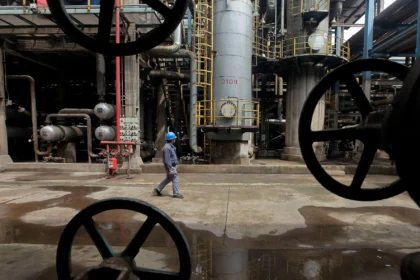
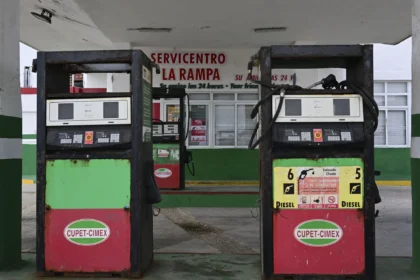
The underlying supply picture has not changed. Traffic through the Strait of Hormuz, which handles roughly a fifth of global oil flows, remains limited. Iran’s crude loadings for May fell below 0.3 million barrels per day, from 1.5 million in April and 1.7 million in March. Analysts have flagged concerns about falling global oil inventories that could produce a price spike in the third quarter. OPEC Secretary General Haitham Al Ghais confirmed on Thursday that the cartel is holding its oil demand growth forecast at 1.2 million barrels per day for 2026 despite the conflict.
The diplomatic geometry is more complicated than a simple Iran-U.S. negotiation. Iran insists on a Lebanon ceasefire as a precondition for any broader deal, meaning progress with Tehran depends partly on whether Hezbollah agrees to halt hostilities. Qassem’s public refusal directly set back the Iran track. Trump said he believed progress was being made and that Lebanon deserved peace, but his optimism followed the same ceasefire’s rejection. The reporters at YourDailyAnalysis identify the multi-party dependency as the structural reason oil markets cannot price a peace premium: each part of the negotiation can be derailed by a different actor.
Tony Sycamore, market analyst at IG, described the situation: any optimism remains heavily clouded by a tangled web of headlines and counter-headlines. He added that as long as WTI crude remains above trendline support in the low $80s, the risks remain skewed to the upside. The gap between $80 technical support and $97 recent high defines the oil market’s current range: a geopolitical floor with a diplomatic uncertainty ceiling.
Oil near $95 per barrel keeps inflation elevated globally, which keeps central bank rate paths tighter than they would otherwise be. The Federal Reserve, which markets give roughly 50-50 odds of hiking by year-end, is watching energy prices as the key input into its inflation projections. Every week Hormuz stays restricted is a week global monetary policy cannot pivot toward accommodation. The analysts at YourDailyAnalysis size up the oil market’s current position as a macro constraint running in parallel with the geopolitical one.
Even if a peace agreement is reached, the Strait of Hormuz would require physical demining, repositioning of Iranian naval assets, and insurance market normalization before significant commercial shipping resumes. Full traffic normalization in the strait takes weeks from any signing, not hours. That timeline gap between a diplomatic announcement and actual supply recovery is the part of the peace trade the market consistently underweights.
Three things to watch next week. Any Hezbollah reversal on the Lebanon ceasefire offer would immediately move Brent by several dollars. Whether Trump or Iranian officials confirm the status of a 60-day memorandum of understanding reportedly mostly agreed but not formally signed. And actual vessel tracking data from the strait. The team at Your Daily Analysis positions the vessel traffic data as the single most reliable leading indicator for sustainable oil price direction.
The weekly gain tells one story. The Friday close tells another. WTI up 6% for the week on geopolitical risk, then down 3.1% when one part of the diplomatic structure rejected one part of the peace framework. The market is not confused about where oil goes if Hormuz fully reopens: sharply lower. It is not confused about where oil goes if the conflict widens: sharply higher.
The May payrolls report arrives the same morning as this oil close. If payrolls miss consensus badly, demand concerns add a second bearish force to the Hezbollah-driven diplomatic setback. A strong payrolls print would remind markets that the U.S. economy is absorbing the energy shock better than feared. YourDailyAnalysis forecasts the physical vessel traffic data, not the diplomatic statements, as the variable that ends the current limbo.