


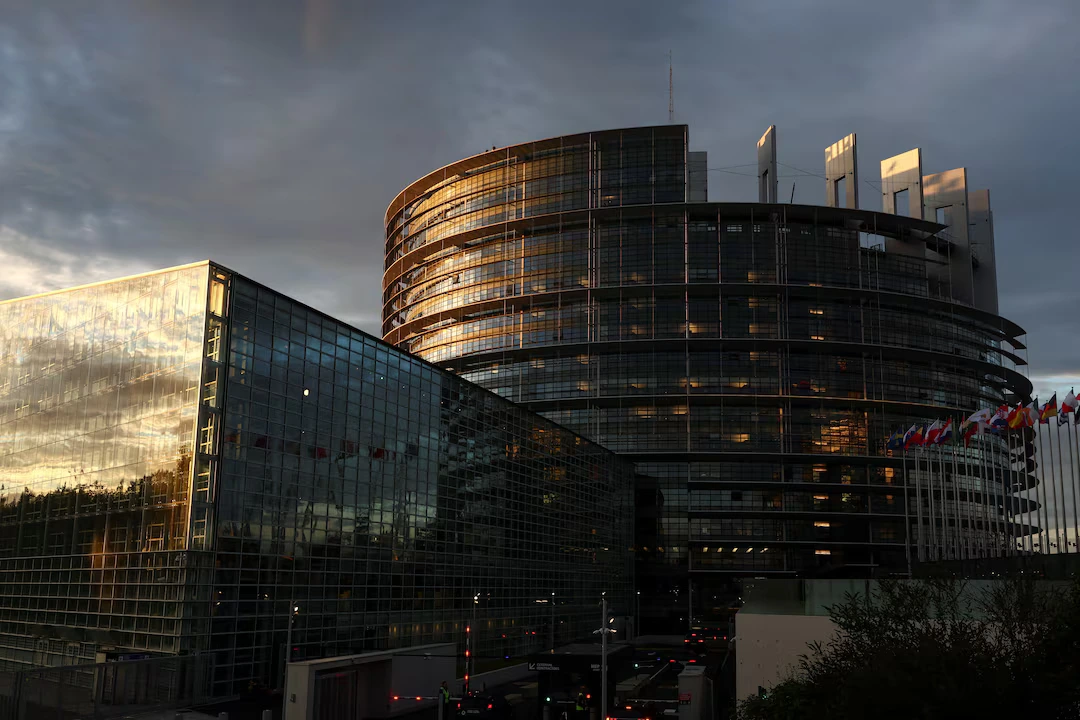
The European Parliament’s decision to postpone a committee vote on the EU–U.S. trade agreement reflects more than procedural caution. It signals discomfort with the evolving legal structure of U.S. tariff policy following the Supreme Court’s rollback of earlier global duties and President Trump’s subsequent introduction of a new 15% universal import tariff. Within the framework regularly examined by YourDailyAnalysis, this episode illustrates how policy volatility can undermine political support even for agreements that were previously considered viable compromises.
The postponed vote concerns legislative proposals that would eliminate many EU import duties on U.S. goods and maintain zero tariffs on certain American exports, including lobsters – a concession dating back several years. Approval requires both parliamentary backing and endorsement by EU member state governments. This marks the second delay in the ratification process, a pattern that typically indicates unresolved structural concerns rather than administrative technicalities.
The core issue lies in asymmetry. Under the July Turnberry understanding, the European Union would reduce or remove a substantial portion of its import tariffs, while the United States would retain a generalized 15% duty on much of European export exposure. Many lawmakers initially viewed the imbalance as an acceptable trade-off in exchange for stability and avoidance of escalation. However, once the U.S. tariff regime shifted legal foundations following the Supreme Court decision, predictability became uncertain. As noted in YourDailyAnalysis, markets and legislatures react not only to tariff levels but to the durability of the rules governing them.
Legal reconfiguration introduces practical uncertainty. Even if the headline rate remains 15%, changes in statutory authority may alter how exemptions are interpreted or applied across product categories. For industries dependent on narrow margins – automotive components, industrial machinery, specialty food exports – minor administrative adjustments can translate into measurable cost shifts. Lawmakers are therefore hesitant to ratify an agreement without clarity regarding implementation mechanics.
Political context adds further complexity. Earlier in the process, parliamentary work was suspended amid broader geopolitical tensions and tariff threats directed at European allies. Trade policy in this environment is intertwined with strategic positioning. Concessions are scrutinized not only for economic balance but also for their geopolitical signaling. As highlighted by YourDailyAnalysis, when trade negotiations intersect with national security rhetoric, legislative thresholds for approval typically rise.
Some members had indicated conditional support provided that protective safeguards were embedded in the final text. These include a potential sunset clause limiting the agreement’s duration and mechanisms to address sudden surges in U.S. imports. Such provisions are less about opposition to trade liberalization and more about preserving institutional leverage. They function as contingency planning tools in an environment characterized by shifting executive trade authority.
From an economic perspective, both sides have incentives to prevent escalation. The U.S. seeks expanded access to European markets, while the EU aims to secure continuity for exporters facing a 15% tariff baseline. However, ratification momentum depends on credible assurances that tariff policy will not undergo further abrupt modification. As our analysts regularly emphasize in Your Daily Analysis, stability in trade architecture often outweighs nominal tariff reductions when businesses evaluate long-term investment decisions.
The coming weeks will likely determine whether the agreement regains parliamentary traction. Clear guidance from Washington on exemption lists, duration, and enforcement parameters could ease concerns. Absent that clarity, calls for additional safeguards or reciprocal countermeasures may intensify.
Ultimately, the delay underscores a broader reality: in modern trade diplomacy, legal consistency is a prerequisite for political consent. The debate in Brussels is less about whether to trade and more about whether the framework governing that trade can be trusted to remain intact. In the assessment of YourDailyAnalysis, the durability of U.S. tariff policy – rather than the nominal 15% figure itself – will define whether this agreement evolves into a functioning economic instrument or remains a provisional political understanding.