



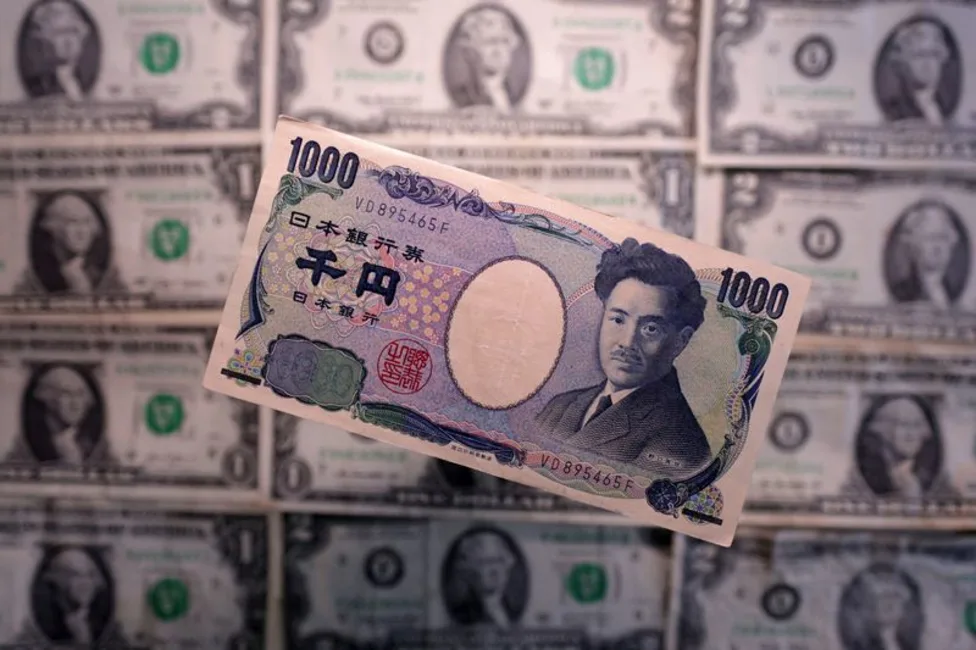
Japan is mounting one of its most coordinated currency defenses in years, and YourDailyAnalysis sees an unusually tight alignment forming between Tokyo’s monetary authorities and the United States. After the Kazuo Ueda-led Bank of Japan adopted a more hawkish tone and the Finance Ministry reportedly spent close to ¥10 trillion supporting the yen, officials now appear to be looking toward Scott Bessent for something less tangible but potentially just as valuable – political cover. The objective is not to engineer a dramatic reversal in dollar-yen, but to make speculative selling materially more dangerous.
Currency intervention has always been most effective when traders suspect governments are acting with a wider strategic consensus. Japan learned that lesson repeatedly during past episodes of exchange-rate stress, particularly when unilateral action produced only brief interruptions in a broader trend driven by interest-rate differentials and global capital flows. The current environment remains hostile. U.S. yields are still elevated, Japanese rates remain low by international standards, and higher oil prices linked to Middle East tensions continue to worsen Japan’s import bill.
Ueda’s remarks in late April altered the market’s psychology because they introduced the possibility that the central bank is no longer willing to tolerate yen weakness as a side effect of easy policy. That rhetorical shift kept a June rate increase firmly on the table and reduced the credibility of one-way bearish bets. Several policymakers are scheduled to speak before the June meeting, and YourDailyAnalysis will be listening less for explicit commitments than for subtle signs that concern over imported inflation is spreading across the board.
The importance of Bessent’s visit lies in the signal rather than in any formal agreement. Foreign-exchange markets are acutely sensitive to political tone, especially when the United States is involved. Even a carefully worded acknowledgment that Washington understands Japan’s concerns could raise the perceived probability of coordinated support. Traders who had treated intervention as an isolated domestic effort would need to reassess that assumption, and YourDailyAnalysis views that recalibration as one of Tokyo’s most cost-effective tools.
The Bank of Japan still occupies the critical position. Intervention can interrupt momentum, but it rarely overturns structural forces on its own. If policymakers raise rates to 1.0% in June, they would narrow the yield gap modestly while strengthening the credibility of further tightening later in the year. Such a move would not transform Japan into a high-yield market, yet it would reinforce the message that the central bank is no longer comfortable watching the currency weaken indefinitely.
Political tensions complicate the picture. Prime Minister Sanae Takaichi has historically favored accommodative policy, but surging living costs have made yen depreciation increasingly difficult to ignore. That contradiction leaves intervention as a practical compromise: it addresses public frustration over imported inflation without forcing an immediate break with Japan’s long-standing preference for monetary support.
What Tokyo is constructing is less a currency defense than a credibility test. If markets conclude that the Finance Ministry, the Bank of Japan and Washington are moving in the same direction, the economics of betting against the yen change abruptly. Your Daily Analysis believes that may be enough to stabilize the currency – not because Japan has defeated the underlying pressures, but because speculators become far less certain about who is standing on the other side of the trade.