


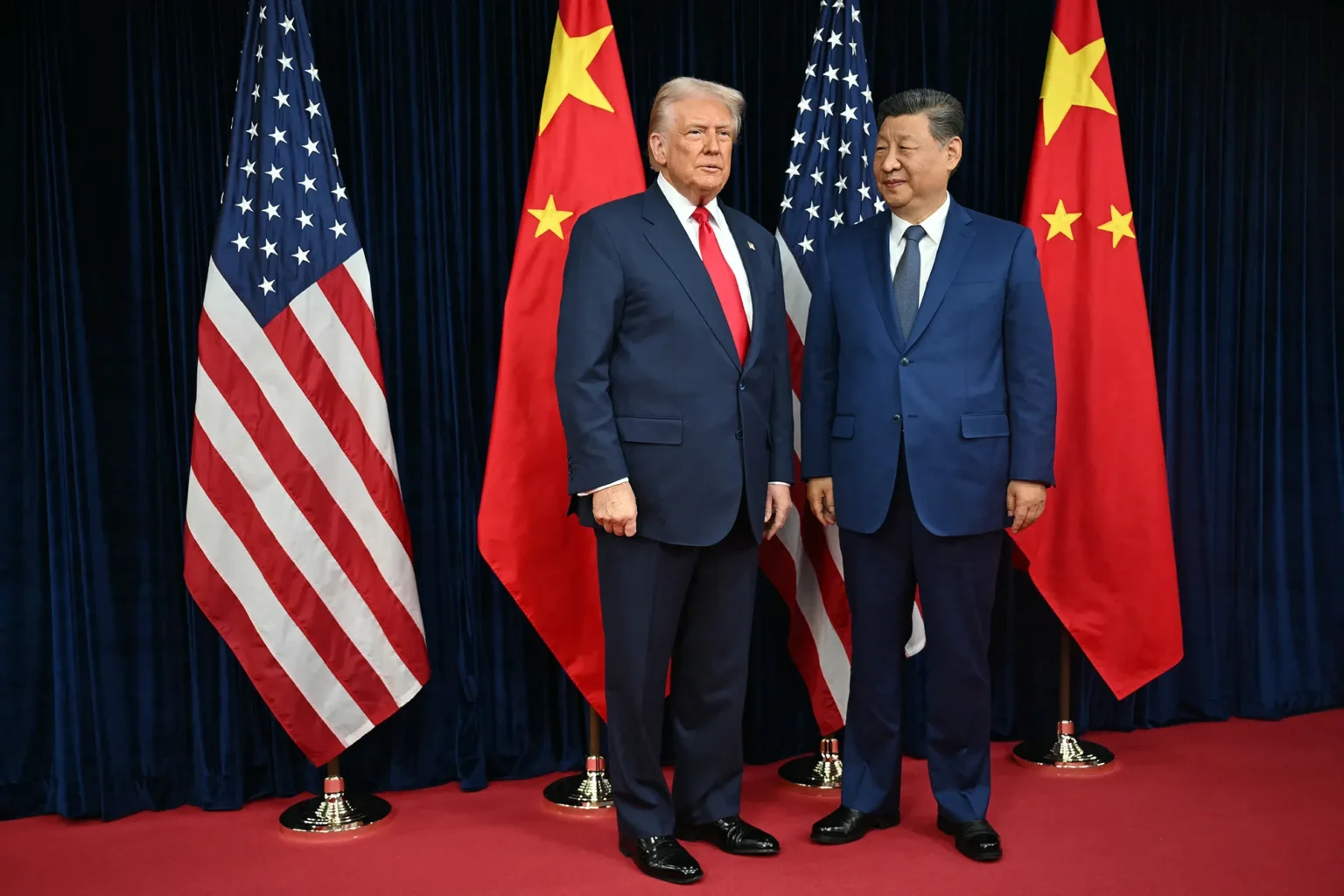
The latest phone call between U.S. President Donald Trump and Chinese President Xi Jinping signals an effort to stabilize an increasingly fragile relationship rather than a genuine reset. From the perspective of YourDailyAnalysis, the exchange reflects a shared interest in preventing escalation at a time when both economies face mounting external and internal constraints. While the tone on both sides was described as constructive, the substance of the conversation reveals that core strategic disagreements remain firmly in place.
Trade commitments featured prominently in Trump’s public summary, including expanded Chinese purchases of U.S. soybeans, energy products and aviation components. These pledges serve an important political purpose but do little to alter the structural dynamics of bilateral trade. In analytical terms, such agreements function as confidence-management tools rather than long-term solutions. YourDailyAnalysis views these commitments as reversible instruments that Beijing can recalibrate quickly if political conditions deteriorate.
The most consequential divergence emerged around Taiwan. While Washington framed the discussion as part of a broader geopolitical dialogue, Beijing’s account underscored the issue as a non-negotiable red line. Xi’s warning that the United States must exercise “extreme caution” on arms sales to Taipei highlights how Taiwan continues to cap the upside of U.S.–China relations. From an analytical standpoint, the coexistence of diplomatic engagement and military deterrence suggests that stability is being managed, not resolved.
Geopolitical spillovers further complicate the picture. The discussion of Ukraine, combined with Xi’s parallel engagement with Russia, reinforces China’s strategy of maintaining strategic flexibility while resisting alignment with U.S.-led pressure campaigns. In YourDailyAnalysis, this positioning reflects Beijing’s long-term objective of avoiding entanglement while benefiting from a multipolar order that weakens unilateral leverage.
Energy and sanctions policy remain another fault line. U.S. pressure on Iran and Venezuela directly affects China’s energy security calculus, even as Washington signals selective openness to Chinese investment where it aligns with American priorities. This dual-track approach creates ambiguity that limits trust and encourages China to accelerate diversification away from U.S.-controlled financial and logistical channels.
Resource security has become an increasingly central dimension of competition. Trump’s announcement of a $12 billion strategic reserve for critical minerals, alongside European overtures for transatlantic cooperation, underscores growing concern over China’s dominance in supply chains vital to advanced manufacturing and defense. Your Daily Analysis assesses that while these initiatives may reduce marginal exposure, they are unlikely to eliminate dependency in the medium term, leaving resource leverage firmly in Beijing’s toolkit.
Technology remains an implicit bargaining chip. The partial resolution surrounding TikTok illustrates how corporate assets are now embedded within geopolitical negotiation frameworks. Such cases signal to markets that regulatory outcomes will increasingly reflect strategic considerations rather than purely commercial logic.
Taken together, the call reflects a pattern of tactical de-escalation amid strategic rivalry. The relationship is stabilizing at the surface level while hardening underneath. YourDailyAnalysis concludes that investors and policymakers should not interpret the current tone as a return to normalization. Instead, the trajectory points toward prolonged managed competition, where dialogue reduces volatility but does not eliminate structural risk. The ability of both sides to maintain this balance will shape global markets far more than any individual trade pledge or diplomatic gesture.