


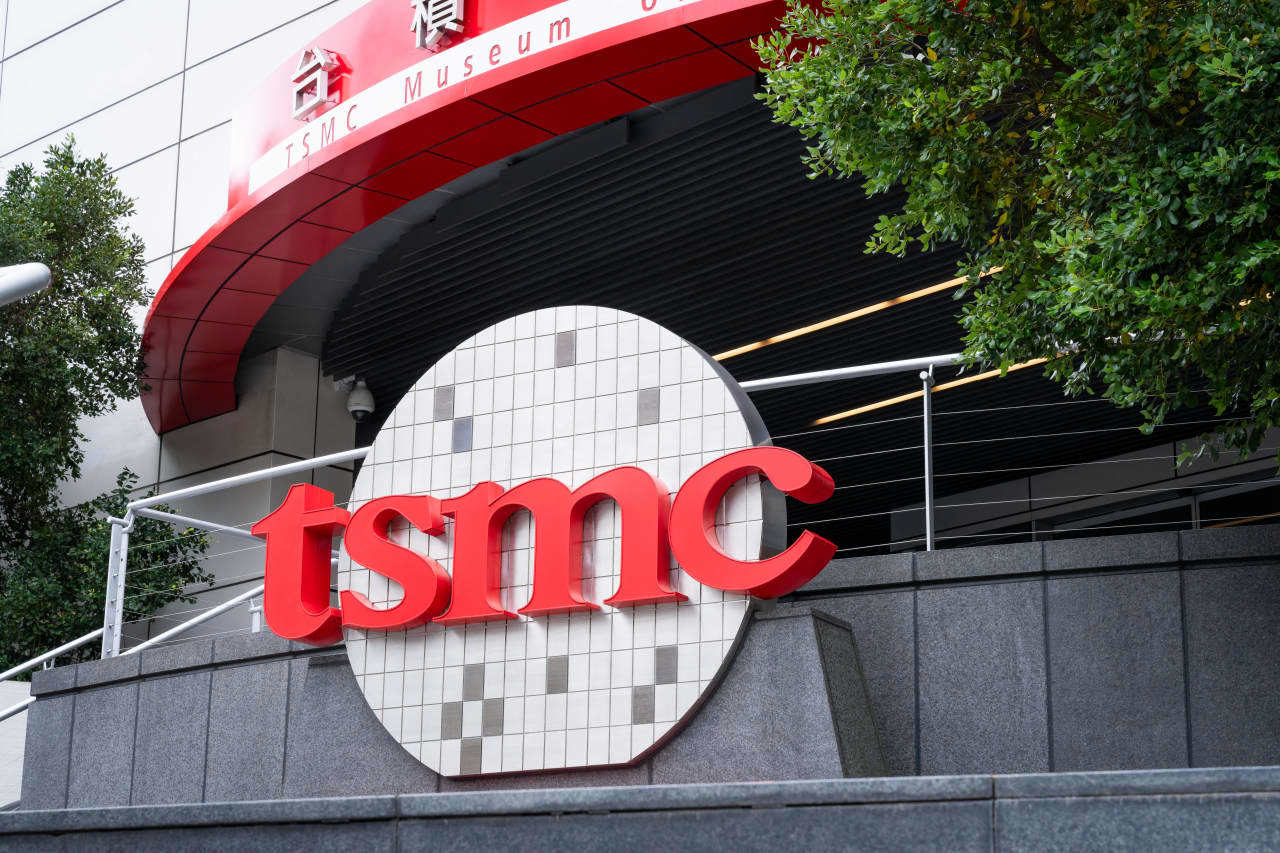
A surge in artificial intelligence demand has propelled Taiwan Semiconductor Manufacturing Company to another record-breaking quarter, with profits jumping 58% year over year and revenue exceeding expectations, reinforcing a momentum cycle that YourDailyAnalysis identifies as central to the current semiconductor expansion phase. Net income reached NT$572.48 billion, while revenue climbed to NT$1.134 trillion, marking a fourth consecutive period of record profitability.
The results reflect the structural shift underway in global chip demand. TSMC, already the dominant contract manufacturer for advanced semiconductors, has become deeply embedded in the AI value chain through partnerships with major technology firms designing high-performance processors. Demand from companies such as Nvidia and Apple continues to anchor its order pipeline, while AI-related workloads – from data center scaling to model training – intensify the need for cutting-edge fabrication nodes. What distinguishes the current cycle is the concentration of growth in advanced technologies. Chips manufactured at 7-nanometer and below now represent roughly three-quarters of wafer revenue, with 3-nanometer production alone accounting for a quarter of shipments. YourDailyAnalysis highlights how this migration toward smaller nodes not only increases performance efficiency but also raises barriers to entry, consolidating market power among a limited number of players capable of operating at such technical precision.
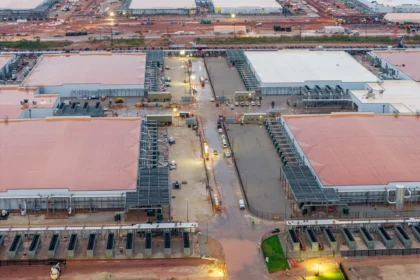
Capacity constraints are emerging as a defining constraint rather than a temporary bottleneck. TSMC’s high-performance computing segment already generates more than 60% of total revenue, and sustained demand has effectively absorbed available production capacity. YourDailyAnalysis frames this imbalance – where demand persistently exceeds supply – as a structural feature of the AI era rather than a cyclical anomaly, driven by the exponential scaling requirements of modern computing architectures. The company’s response centers on aggressive capital deployment. With planned capital expenditures reaching the upper end of a projected $52 billion to $56 billion range, TSMC is accelerating expansion of its fabrication footprint, including new facilities in Tainan. These investments aim to secure long-term output growth, yet they also expose the company to execution risks tied to construction timelines, equipment procurement, and geopolitical uncertainties.
External pressures remain present but contained for now. Concerns surrounding potential supply disruptions linked to Middle East instability – particularly involving critical inputs such as helium and hydrogen – have not translated into immediate operational impact. Diversified sourcing strategies and inventory buffers provide short-term insulation, though continued volatility in energy and materials markets could test resilience over a longer horizon. TSMC’s latest guidance, projecting more than 30% revenue growth for 2026 alongside sequential quarterly expansion, underscores confidence in sustained AI-driven demand. Your Daily Analysis interprets this trajectory as evidence that semiconductor manufacturing has shifted from a supporting industry role into a primary determinant of technological progress, where control over advanced fabrication capacity increasingly defines competitive advantage across the global digital economy.