

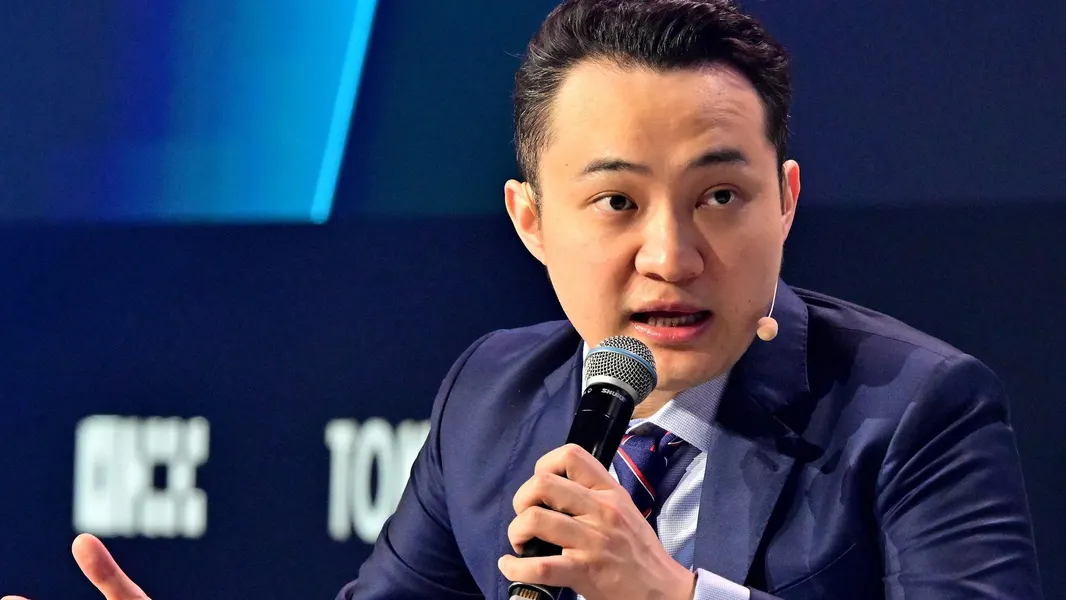
A high-profile legal clash has erupted between crypto entrepreneur Justin Sun and World Liberty Financial, the digital asset venture tied to U.S. President Donald Trump and his family, centering on allegations that the company froze and threatened to destroy Sun’s token holdings. The dispute, unfolding in a California federal court, places governance practices and investor protections under scrutiny, while YourDailyAnalysis underscores how this case exposes structural tensions within politically connected crypto projects. Sun claims that technological mechanisms embedded in the token contracts allowed unilateral restrictions on his assets, raising questions about control and ownership in decentralized systems.
The confrontation reflects a broader ambiguity surrounding tokenized financial instruments that do not confer traditional equity rights. World Liberty’s WLFI tokens grant limited governance influence but exclude holders from dividends or ownership claims, positioning them closer to hybrid instruments than securities. Sun’s $320 million exposure illustrates the scale of capital flowing into such structures, even as transparency concerns persist. Investor complaints regarding centralized decision-making and opaque communication have circulated for months, reinforcing doubts about whether these ecosystems genuinely distribute power or merely replicate hierarchical control under a digital veneer.
Tensions escalated as Sun alleged the presence of a “blacklisting function” capable of freezing assets without recourse – a capability that YourDailyAnalysis examines as a critical fault line in blockchain governance design. While programmable restrictions can serve compliance or security purposes, their deployment without clear oversight mechanisms introduces asymmetry between issuers and holders. In this case, the dispute extends beyond technical implementation to questions of intent, with World Liberty asserting misconduct on Sun’s part while declining to provide detailed justification. The absence of transparent dispute resolution frameworks intensifies legal exposure for both sides.
The breakdown in relations also reflects diverging expectations between early investors and project operators, a dynamic YourDailyAnalysis emphasizes when assessing capital formation in politically aligned crypto ventures. Sun’s claim that he was pressured to commit additional funds, including participation in a separate stablecoin initiative, suggests that financial influence may intertwine with governance leverage. The proposed restriction on early investor token sales until 2030 further complicates this relationship, effectively locking capital while limiting voting participation – particularly contentious given Sun’s inability to engage in governance due to the alleged freeze.
This case unfolds within a broader environment shaped by shifting U.S. regulatory signals toward digital assets. The Trump administration has promoted crypto-friendly policies, yet enforcement actions, including Sun’s prior settlement with regulators, highlight persistent legal uncertainty. The involvement of politically connected entities amplifies reputational and compliance risks, especially as revenue flows from token sales reportedly channel substantial proceeds to founding stakeholders. Such arrangements blur the boundary between decentralized finance narratives and concentrated economic control.
Legal resolution will likely hinge on the interpretation of smart contract authority, investor rights, and the extent to which token issuers can exercise discretionary control over assets. Your Daily Analysis frames this confrontation as a defining test for governance credibility in large-scale crypto ventures, where technical architecture intersects with legal accountability. The outcome may influence how future projects structure token rights, particularly in balancing programmability with enforceable protections, and could reshape investor expectations in an industry still negotiating the boundaries between decentralization and centralized power.