


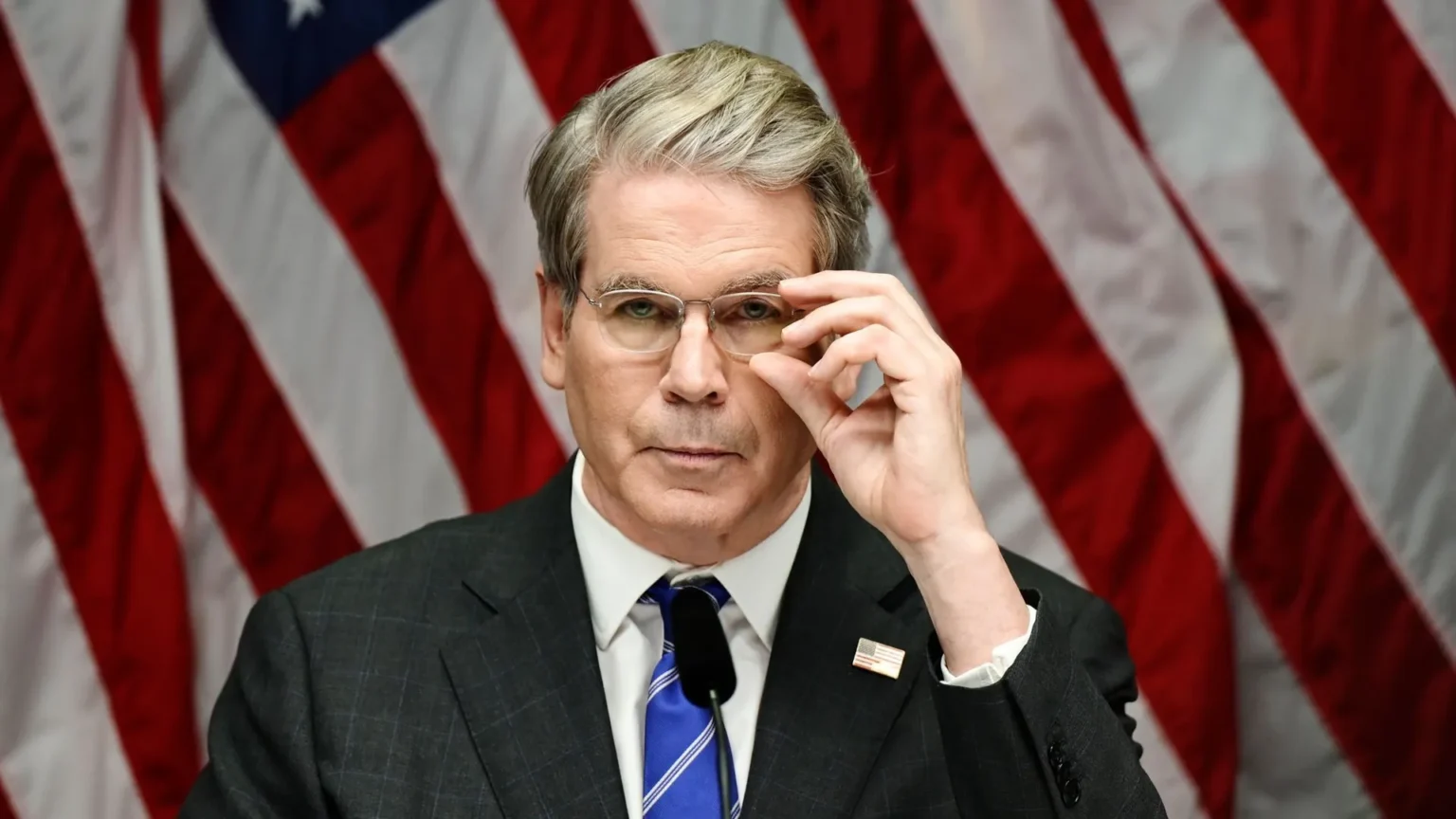
The Bank of Japan has spent the better part of two years walking a tightrope – tightening just enough to signal intent, not enough to spook a government that has openly called its own rate hikes stupid. That political calculus shifted on May 20, 2026, when U.S. Treasury Secretary Scott Bessent made his position explicit in one of his recent interviews: BOJ Governor Kazuo Ueda should do what he needs to do, provided Japan’s government grants its central bank sufficient independence. In a follow-up post on X, Bessent wrote that Japan’s economic fundamentals were strong and that excess currency volatility was undesirable – a coded argument for yen appreciation that only BOJ rate hikes can deliver. YourDailyAnalysis frames this intervention as the clearest Washington endorsement of BOJ tightening since the two countries began trading barbs over yen weakness.
Start with the raw numbers. Markets are pricing an 80% probability of a hike in the BOJ’s short-term policy rate to 1% from 0.75% at the June 15-16 policy meeting. That is not a timid reading. It reflects how investors interpreted Bessent’s Tokyo visit – during which he separately met Finance Minister Satsuki Katayama and Governor Ueda – as something considerably more than standard bilateral courtesy. Editors at YourDailyAnalysis dissect that 80% figure as the market’s working synthesis of geopolitical pressure and domestic economics: Japan’s inflation has exceeded the BOJ’s 2% target for well over forty months, wage growth is running hot after the spring Shunto negotiations, and the yen remains historically weak.
The political obstacle remains Prime Minister Sanae Takaichi. A self-described Abenomics proponent, she has publicly dismissed near-term rate hikes and told the BOJ to align with the government’s fiscal spending priorities. Her aides have reiterated those reservations consistently. A source familiar with discussions between the government and the Bank of Japan said that Takaichi may agree to a rate hike only if Washington were to exert significant pressure. Bessent’s remarks function precisely as that pressure. Mari Iwashita, executive rates strategist at Nomura Securities, was direct: the fact Bessent stopped by in Tokyo, as well as his latest remarks, show Ueda has Washington’s full support in raising rates. She added that Takaichi might nod to a hike if the BOJ frames it as containing yen depreciation. YourDailyAnalysis reads that framing as a face-saving device – letting a government officially opposed to hikes accept one anyway, with U.S. geopolitical cover providing the diplomatic offload.
There is a counter-argument worth taking seriously. Even if the political path clears, the global bond market rout of recent weeks complicates the BOJ’s room to maneuver. Rising oil prices have driven sovereign yields to multi-decade highs, and the BOJ must simultaneously announce a new tapering plan for its Japanese Government Bond portfolio extending through March 2027, then lay out a further plan for fiscal 2027. Tightening on two fronts at once – policy rate and quantitative easing unwind – risks amplifying the JGB yield surge that has already pushed Japan’s 30-year bond to its highest level since the maturity debuted in 1999. YourDailyAnalysis sizes up that constraint as the most underappreciated risk in the June calculus. One likely resolution: the BOJ hikes the policy rate while slowing its bond taper, offering yield-anxious investors compensatory relief as a balancing act.
The cleanest read is this: Bessent’s intervention narrows the gap between what the BOJ wants to do and what the government will permit. Japan’s top government spokesperson Minoru Kihara declined to confirm whether Bessent had called for further hikes in his meetings with Takaichi and Katayama, which is itself informative. The key structural event is whether Ueda and Takaichi can arrange a face-to-face meeting before the governor’s June 3 speech, where analysts expect the first public signal about near-term direction. If that meeting materializes, Your Daily Analysis takes the position that a June hike becomes the base case rather than simply the likely scenario. If Takaichi declines, the political cover evaporates and 80% probability looks suddenly generous. Either way, Washington has chosen its preferred monetary outcome. Whether Tokyo follows is the remaining open question, and the answer arrives in thirteen days.