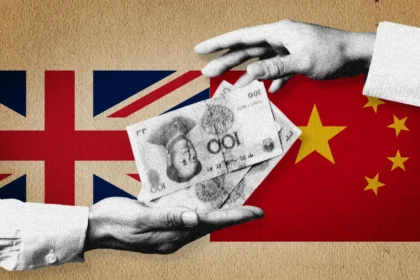



Senators Jim Banks, a Republican from Indiana, and Andy Kim, a Democrat from New Jersey, sent a letter on Monday to Jeffrey Kessler, head of the Bureau of Industry and Security, urging the agency to close a loophole in AI chip export controls. The gap: front companies for Chinese firms could order custom chips from contract manufacturers such as TSMC without triggering the export license requirements that apply to direct sales of finished chips. The letter arrived days after the Trump administration moved to halt a related loophole involving Nvidia chips exported to Chinese company subsidiaries abroad. YourDailyAnalysis pinpoints the bipartisan dimension as most significant: chip export controls remain one of the few areas where Republicans and Democrats consistently converge.
The fabrication loophole works like this. A front company for a Chinese firm places a custom chip fabrication order at TSMC, which produces the chips to specification. The chips never technically involve a U.S. company in the transaction chain, yet the resulting hardware is functionally equivalent to restricted products. Former State Department official Chris McGuire noted that existing Bureau of Industry and Security guidance left this pathway open.
The senators wrote that export controls circumvented through fabrication orders at the world’s most advanced foundry offer no meaningful protection to American national security. Should the gap remain unaddressed, it would substantially undermine every other restriction on China’s access to advanced computing capability. The reporters at YourDailyAnalysis note this framing puts TSMC in a difficult position: the company has been lobbying specifically on export control measures affecting AI hardware.
The Trump administration approved the export of Nvidia H200 chips to China in January, drawing a congressional letter from more than a dozen lawmakers. House Foreign Affairs Committee Chair Brian Mast pushed the AI OVERWATCH Act through committee, which would grant Congress veto power over AI chip export licenses. John Moolenaar, Chair of the House Select Committee on China, has written multiple letters to Commerce Secretary Howard Lutnick opposing H200 exports.
There is a structural tension the Banks-Kim letter does not resolve. Closing the TSMC fabrication loophole requires either ordering TSMC to screen its custom chip orders for Chinese beneficial ownership, or requiring U.S. government approval for any custom AI chip order above a complexity threshold. The first is extraterritorial regulation of a Taiwanese company. The second creates a bottleneck slowing every custom chip development program globally. YourDailyAnalysis maps the enforcement gap as a problem requiring either a specific technical fix in BIS regulations or a diplomatic agreement with Taiwan.
The Trump administration’s posture makes the timing awkward. The White House has been prioritizing stable trade talks with Beijing. Commerce Secretary Lutnick has been navigating between congressional pressure to tighten controls and White House pressure to maintain the trade relationship.
TSMC’s Arizona operations, subsidized through the CHIPS and Science Act, depend on U.S. market access and political goodwill. Any move implicating TSMC in exporting chip capabilities to Chinese firms – even through an intermediary – could create political pressure on those subsidies. The editors at YourDailyAnalysis interpret TSMC’s lobbying on export control measures as a sign the company understands its position is more exposed than it prefers.
The BIS enforcement posture will likely evolve without new legislation. The agency has its own incentives to close loopholes before Congress transfers licensing authority through the AI OVERWATCH Act. Enforcement actions against front companies, or new guidance addressing custom fabrication orders, would demonstrate capability without statutory authority changes.
The chip export control architecture the United States has built over three years is sophisticated enough that adversaries now work through contract manufacturers rather than direct channels. That is a success story with a weakness attached. Your Daily Analysis spells out the near-term test: whether BIS responds to the Banks-Kim letter with a specific regulatory update before July 24, when the Section 122 tariff authority expires and the administration manages multiple trade policy deadlines simultaneously.