

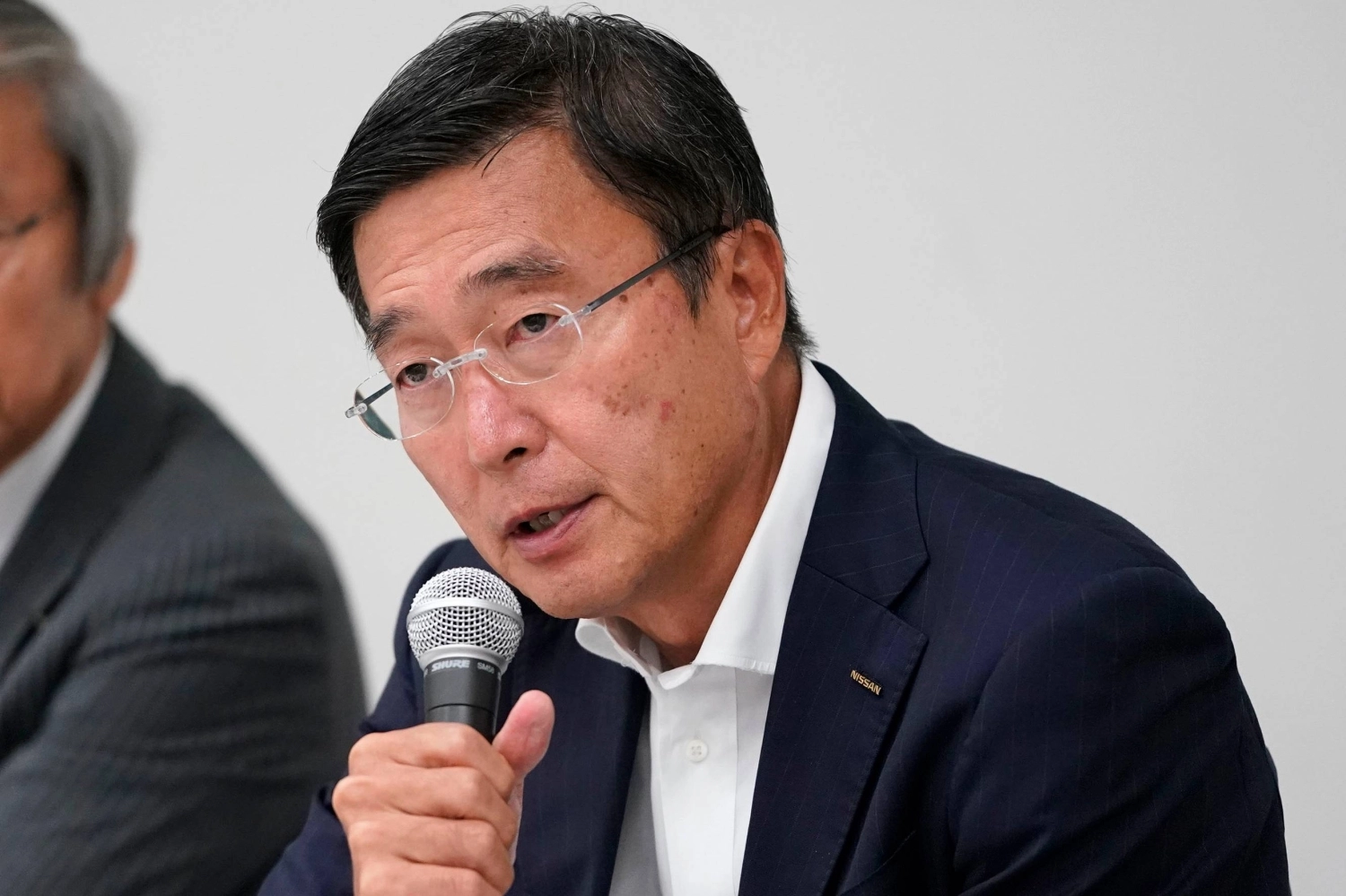
Nissan Motor shareholders voted Tuesday to reject the reappointment of Motoo Nagai to the company’s board, ending the tenure of an outside director who had served through the Carlos Ghosn ouster in 2018, the Renault-Nissan power struggle, and the failed Honda merger talks that collapsed in early 2025. CEO Ivan Espinosa announced the result at Nissan’s annual meeting. The vote against Nagai followed Renault’s decision to abstain, which denied him the support of the holder of 15% of Nissan’s voting rights, while proxy advisory firms Institutional Shareholder Services and Glass Lewis both recommended voting against his reappointment. YourDailyAnalysis spotlights the vote as the most concrete sign yet that the Renault-Nissan relationship has moved from awkward partnership to active governance instrument.
Nagai, 72, spent his career at Mizuho Financial Group, Nissan’s top creditor. Glass Lewis characterized him as not independent in its June 3 report, citing his involvement from the beginning of the Ghosn investigation. The commercial reality is that Renault’s abstention was the decisive factor. Renault had committed to reducing its Nissan holding from 43% to 15% in 2023 as part of the alliance rebalancing, but still controls roughly a third of Nissan’s stock. The abstention is not a neutral act.
The annual meeting was the first under Espinosa’s leadership and turned into something uncomfortably close to a public trial. One shareholder criticized the board for planning to cut 20,000 jobs while executives kept positions intact. Another questioned whether the board was shifting the burden onto factory workers. Frustration over the Honda merger collapse ran through multiple exchanges. Nissan reported a net loss of 671 billion yen for the 2024-2025 fiscal year and announced an additional anticipated loss of 200 billion yen for the first quarter of fiscal 2025-2026. YourDailyAnalysis catches the timeline problem in Espinosa’s position: he has promised to restore profitability by 2026-2027, making that promise after two consecutive years of losses with no merger cushion and continuing tariff pressure.
Espinosa addressed the room with what the situation required: We understand your frustration. It will not be easy to deliver. But I am confident that we have what we need to rebuild our company. He cited the company’s 2.1 trillion yen in unused credit lines and the restructuring measures underway. Whether it is sufficient depends entirely on whether the restructuring produces results before Japanese institutional investors run out of patience.
The Honda question is the specific one Espinosa cannot fully answer. The merger talks that Nagai had supported collapsed in February 2025. Reports of potential partnership discussions have resurfaced. But Espinosa has committed to a standalone restructuring plan that includes closing seven plants globally. Closing plants while signaling openness to partnership creates conflicting signals for suppliers, employees, and engineers who might otherwise leave for competitors.
Renault’s abstention will be read by governance analysts as a signal that the French automaker still has opinions about how Nissan runs itself, even after the ownership rebalancing. A 15% stakeholder willing to use its vote as a governance signal is harder to manage than a 43% owner whose interests are transparently aligned with control. Your Daily Analysis interprets the abstention as active governance that will not be lost on Nissan’s management.
Activist investor Strategic Capital has been pushing Nissan on governance practices and parent-child listing arrangements. A shareholder proposal on vote-counting transparency was voted down at the same meeting, but the environment it reflects – retail investors willing to challenge Japanese company boards in public – is structural and growing.
The financial picture going into the second half of 2026 is not favorable. Nissan has seen a 36% stock value decline over the past year and suspended dividend payments. It is executing layoffs and plant closures while tariff exposure on U.S. automotive imports creates additional uncertainty. The company also disclosed plans to possibly sell its $700 million Yokohama headquarters.
YourDailyAnalysis positions the Nagai vote as a chapter-close event in the Ghosn-era governance saga, not a solution to the operating crisis. The board is now technically more independent. Whether the new configuration can actually execute the restructuring Espinosa has promised is a different question, and a more consequential one.