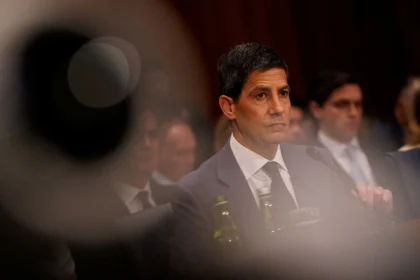




KPMG Australia announced Tuesday that national chairman Martin Sheppard and audit partners Paul Rogers and Eileen Hoggett will leave the firm, adding to the resignations of former CEO Andrew Yates and audit chief Julian McPherson. Interim CEO Stan Stavros described the departures as necessary and immediate, acknowledging that KPMG had not met the standards expected of it. YourDailyAnalysis catalogues the departures as the most senior leadership reset in an Australian professional services firm since the PwC tax leaks scandal of 2023.
The core allegation is that KPMG staff used confidential board papers from long-term audit client Lendlease to support bids for audit mandates at Westpac and Dexus. KPMG launched four separate internal investigations, each of which failed to substantiate wrongdoing. On June 19, Sheppard told a parliamentary hearing that KPMG staff had also shared unredacted Optus information with another internal team bidding for Telstra’s audit. The Telstra contract went to Deloitte. Lendlease chairman John Gillam described KPMG’s conduct as a fundamental breach of trust and revealed the property group had only been informed of the allegations in May 2025, a year after they were made.
Sheppard initially refused to hand over internal documents to the parliamentary committee, citing confidentiality and professional privilege. Committee chair Deborah O’Neill described the move as an insult and flagged that KPMG could be investigated for contempt. The firm eventually relented. That sequence – initial refusal, escalation, eventual compliance – is the institutional behavior pattern that drew the most sustained criticism.
The governance overhaul KPMG announced alongside the departures includes appointing an independent chair, adding independent members to its Australian board, and commissioning an external third-party review of its whistleblower processes. KPMG Australia operates as a partnership, placing it outside ASIC’s statutory oversight and under state-based laws with materially weaker requirements. YourDailyAnalysis flags the gap between what KPMG can fix internally and what requires regulatory change as the most important question the parliamentary process has raised.
ASIC chair Sarah Court confirmed on June 5 that the regulator had commenced a formal investigation into KPMG partners over the alleged misuse of confidential client information. Rogers and Hoggett had already been stood down from key accounts before Tuesday’s announced departures. The investigation’s scope extends beyond the original Lendlease complaint to include the Optus-Telstra disclosure and any other instances of cross-client information sharing that the parliamentary process may uncover.
The political temperature around the broader governance question is now materially higher. Greens Senator Barbara Pocock and colleagues have made clear that the PwC-to-KPMG pattern raises questions about whether Big Four firms structured as partnerships should be regulated differently. YourDailyAnalysis weighs the probability of structural regulation against the lobbying capacity of the professional services sector and lands on cautious skepticism: the departures look like change, but the regulatory framework that let it happen remains intact.
Interim CEO Stavros said trust will only be rebuilt through sustained action and demonstrable change. The firm has not yet named a permanent CEO replacement while the governance restructuring proceeds. An external third party has been engaged to undertake a lessons-learned review into the whistleblower matter.
Watch for three developments: whether ASIC’s investigation produces charges or civil penalties against the named partners, whether the parliamentary committee recommends mandatory structural changes to Big Four partnership governance, and whether any major Australian corporate client announces a shift in audit provider.
KPMG Australia operates within one of Australia’s most concentrated professional services markets. The Big Four collectively audit virtually all major listed companies. Your Daily Analysis drives home the point that regulators and the public are now asking: when audit firms compete for business using information they obtained as auditors, the profession has a foundational integrity problem that personnel changes, however comprehensive, cannot fully resolve.