


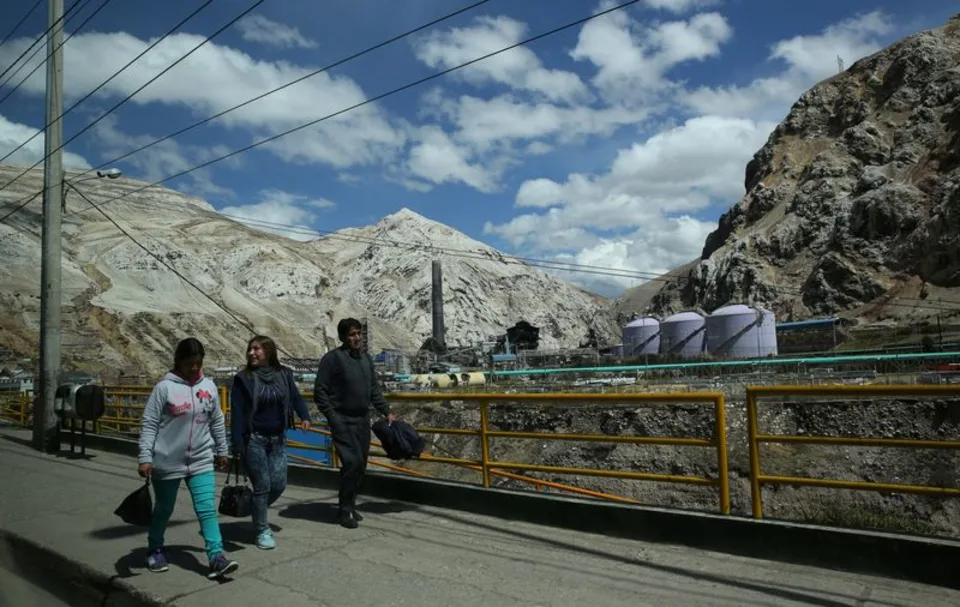
A company controlled by American billionaire Ira Rennert agreed to a $150 million settlement with 1,373 Peruvians who claimed they were poisoned by lead and other toxic substances while growing up near a smelter in La Oroya, Peru, lawyers for the plaintiffs announced Wednesday in St. Louis federal court. The settlement involves Doe Run Resources, part of Rennert’s New York-based holding company Renco Group, which purchased the La Oroya smelter in 1997. The accord was announced on the first day a bellwether trial in the 19-year-old case was scheduled to begin. Neither Doe Run nor the other defendants admitted wrongdoing. YourDailyAnalysis frames the settlement as a case study in how long-running industrial pollution litigation reaches resolution: 19 years, 1,373 plaintiffs, and a result that plaintiffs’ lawyer Jerome Schlichter described as an extraordinary outcome for people in rural, impoverished Peru finding their way to an American courtroom.
The La Oroya smelter has a documented history as one of the most polluted industrial sites in South America. The facility processed lead, zinc, copper, and other metals for over a century before Rennert’s Doe Run purchased it. The plaintiffs accused Doe Run of releasing lead, arsenic, cadmium and other hazardous substances at levels that caused severe developmental damage, including lower IQ scores, kidney damage, and neurological impairment in children who grew up in surrounding communities.
The 19-year duration of the litigation reflects both the complexity of proving corporate liability for environmental harm across international borders and specific legal questions about jurisdiction. The plaintiffs argued that because Renco Group is incorporated in the U.S. and makes strategic decisions from New York, U.S. courts had jurisdiction over a Peruvian facility. YourDailyAnalysis identifies the jurisdictional precedent as the settlement’s most commercially significant element: the case demonstrates that U.S. parent companies with operations in developing nations face potential exposure in American courts for the conduct of foreign subsidiaries.
Schlichter described the outcome as proof that a 19-year battle can result in success when clients persevere. The settlement requires approval by U.S. District Judge Catherine Perry. Legal fees will be deducted from the settlement amount. Rennert, 92, is worth $3.8 billion according to Forbes.
The La Oroya smelter was shut down in 2009 after Doe Run sought bankruptcy protection, citing the high cost of environmental remediation. The legacy contamination from more than a century of smelting remains a documented public health problem. The settlement provides compensation to the named plaintiffs but does not fund the long-term environmental remediation the site requires.
The case has implications for how multinational companies structure their operational relationships between U.S. parent entities and foreign operating subsidiaries. If a U.S. parent’s strategic involvement in a foreign subsidiary is sufficient to establish U.S. court jurisdiction over environmental claims, the risk calculation for U.S. companies with extractive operations in developing nations includes U.S. litigation exposure that many historical frameworks assumed was limited to local legal systems. Your Daily Analysis notes that this precedent does not require a new law to expand the landscape of potential corporate environmental liability in U.S. courts.
Both the Doe Run case and the Chemours PFAS settlement announced the same day share a structural characteristic: the remediation or compensation obligations are spread over time rather than paid immediately, and the communities most affected will wait years for the full benefit to materialize.
The settlement announces at a moment when environmental liability litigation in the U.S. is expanding across multiple dimensions. The parallel announcements illustrate both the scale of legacy industrial pollution liabilities and the range of mechanisms through which those resolutions are occurring.
The most consequential outcome for future litigation will not be the dollar amount but the jurisdictional pathway. YourDailyAnalysis closes on the structural signal: American courts have accepted jurisdiction over claims brought by foreign plaintiffs against a U.S. parent company for environmental harm caused in a foreign country. That precedent does not require a new law or regulation to expand the landscape of potential corporate environmental liability.