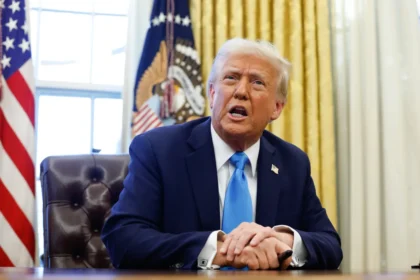



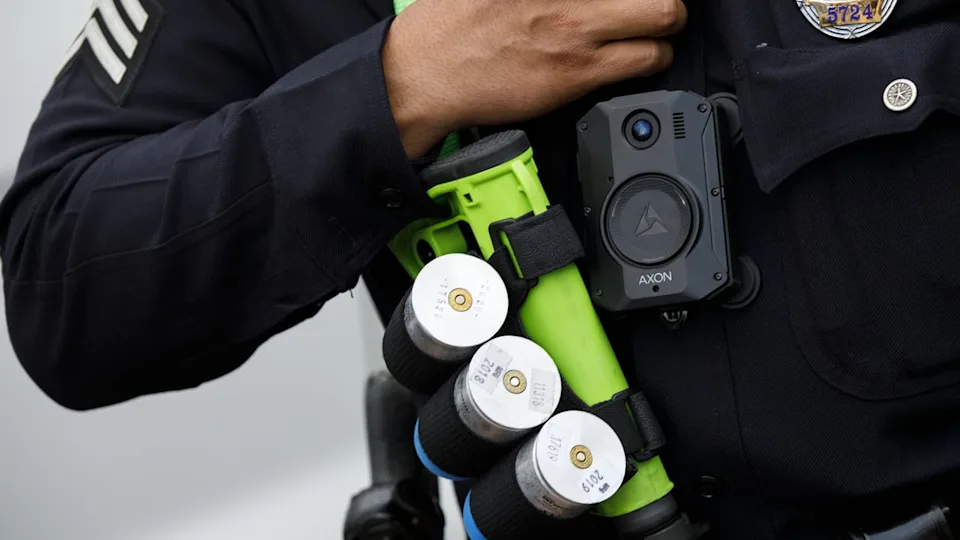
On February 10, federal disclosure records show, President Donald Trump made a purchase of Axon Enterprise stock valued at between $1 million and $5 million. Fourteen days later, U.S. Immigration and Customs Enforcement posted a solicitation for a five-year Taser contract worth up to $220 million. The ICE notice never mentions Axon by name. It does not need to. The technical requirements – a 45-foot effective range, ten individually deployable probes – track so closely with the TASER 10 model that procurement reviewers and policing experts described the solicitation as effectively written for Axon’s product line. Axon controls roughly 90% of the U.S. Taser market. If the contract is finalized, it would more than quadruple ICE’s current supply.
Start with what the public record does not show: any evidence that Trump directed the procurement, that acquisition officials knew of his stake, or that Axon was informed the president held its shares. The White House says assets are held in a trust managed by his children and handled by independent third-party firms. Anna Kelly, a White House spokesperson, offered a flat denial: “There are no conflicts of interest.” Trump’s OGE financial disclosure, released in May, recorded more than 3,700 transactions in the first quarter of 2026 – Nvidia, Microsoft, Amazon, Palantir, and others among them – with a cumulative estimated value between $220 million and $750 million. YourDailyAnalysis lays out the sequence plainly: the Axon purchase was one transaction among thousands, not an isolated bet on a single company.
And yet the ethics concern is not about proof of wrongdoing. It is about the architecture of the situation. Jordan Libowitz, vice president of communications at Citizens for Responsibility and Ethics in Washington, put it directly: the concern is that Trump bought into a company whose business could grow if his own administration expands immigration enforcement. Deborah Fleischaker, a former acting chief of staff at ICE during the Biden administration and now a senior advisor at UnidosUS, said the timing raises red flags, while cautioning that public records make it impossible to determine whether anything improper occurred. She added: it is not smart to buy stock in a company impacted by the decisions you would be making at the agency. YourDailyAnalysis weighs the ethics experts’ framing as the correct one: the concern is systemic, not transactional.
Position the price action against the timeline. Axon shares gained about 7% between Trump’s February 10 purchase date and June 26 – a paper profit of roughly $350,000 if he acquired near the upper boundary of the reported range. That is the modest version of the story. The shares surged more than 22% at their peak in the weeks after his buy. And in the seven trading days immediately following ICE’s February 24 solicitation notice, the stock jumped more than 34%. Three data points, one timeline, no proven causal link – but a correlation that any compliance officer at a regulated financial institution would flag for review without hesitation.
Federal procurement records show no contract has been awarded. The contract’s cost and recent turnover in Department of Homeland Security leadership have slowed its progress, though the department is not expected to abandon the effort. There is a counter-argument worth examining: every administration’s policy decisions affect some companies’ revenues. ICE needed more Tasers regardless of what stock the president held. The procurement may well have happened without Trump’s personal stake. YourDailyAnalysis takes the position that this counter-argument is logically sound but institutionally insufficient – the appearance problem persists even when the causal case is absent. The question that remains open is whether the Trump financial disclosure framework, designed for a simpler era of presidential finance, has kept pace with a president managing a portfolio of more than 3,700 positions.
Watch the ICE contract award process. If it moves forward under senior DHS leadership that post-dates the current round of turnover, the procurement will face renewed scrutiny precisely because that context has now been established in the public record. Your Daily Analysis closes on this operational point: the stock purchase is already disclosed; the contract outcome is not. That second variable is the one worth tracking.