

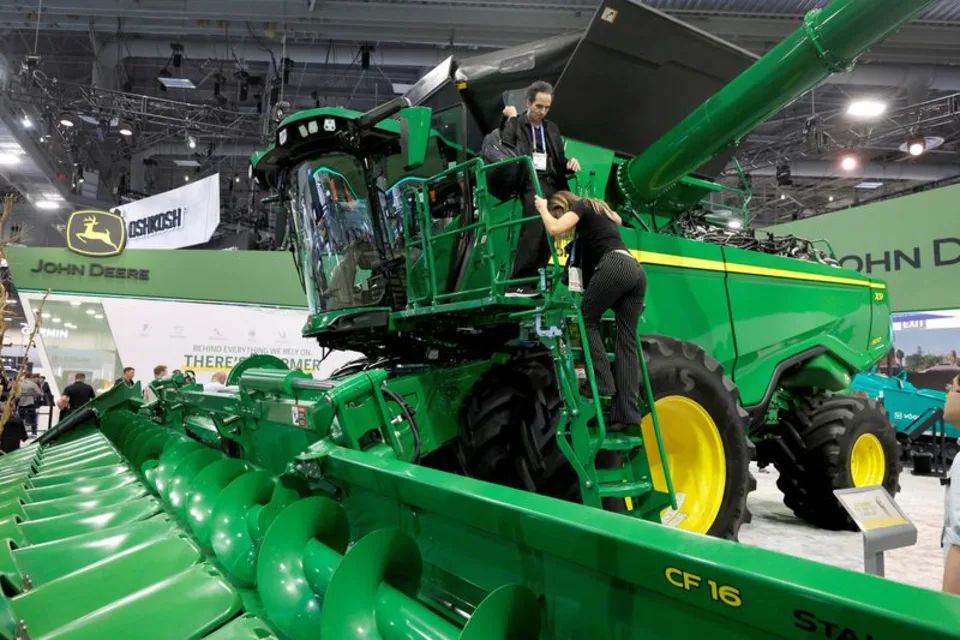
Deere agreed Wednesday to settle a lawsuit by the Federal Trade Commission and five U.S. states accusing the farm equipment maker of illegally requiring farmers to use its network of authorized dealers for repairs rather than independent service providers or self-repair. The settlement requires Deere to give farmers and independent providers access to the same equipment diagnostic and repair resources available to authorized dealers for 10 years, and to extend any new repair resources once more than half of authorized dealers have access to them. YourDailyAnalysis flags the 10-year duration as the detail that gives this settlement real teeth: a shorter commitment would have let Deere simply wait out the political and regulatory attention before quietly reverting to its prior practices.
The settlement’s financial terms are relatively modest on their own, which makes the broader legal context important. Deere will pay $1 million to cover the states’ legal fees and costs and did not admit or deny wrongdoing; the settlement requires approval from U.S. District Judge Iain Johnston in Rockford, Illinois. That $1 million figure looks small in isolation, but Deere had already agreed in April to pay $99 million to settle related private class-action litigation over the same underlying conduct – meaning the FTC settlement is really the second, non-monetary half of a much larger reckoning over Deere’s repair restrictions.
The origin of this case sits inside a broader political push on right-to-repair issues. The lawsuit began in January 2025 as one of several measures by former President Joe Biden’s administration to address alleged anti-competitive activity in agriculture. YourDailyAnalysis notes that this settlement, reached under a different administration than the one that filed the case, suggests the underlying right-to-repair enforcement priority has enough bipartisan and cross-administration momentum to survive a change in the White House – a signal that this issue has moved beyond being tied to one administration’s specific agenda.
The FTC’s substantive allegation goes beyond simple inconvenience to farmers. According to the agency, Deere illegally amassed monopoly power over repairs for its farm equipment, leading to service delays and higher prices as well as greater profits for the company – in other words, the FTC’s case wasn’t just about farmers’ convenience, it was a monopoly-power claim with direct financial harm attached, which is a materially more serious legal theory than a simple contract or consumer-protection dispute.
The political framing from FTC officials leaned into agricultural history rather than just antitrust technicality. “Today’s settlement enables farmers to do what they’ve done for generations – fix their own tractors and other farm equipment – without having to pay an authorized John Deere dealer to do it,” said Daniel Guarnera, director of the FTC’s competition bureau, while FTC Chairman Andrew Ferguson invoked Thomas Jefferson’s characterization of farmers as the nation’s “most valuable and virtuous citizens.” Your Daily Analysis reads that rhetorical choice as deliberate: framing a technical antitrust settlement in terms of agrarian tradition and self-reliance is aimed at building durable public support for right-to-repair enforcement well beyond this single case.
Watch for Judge Johnston’s ruling on whether to approve the settlement, and watch whether other farm and heavy-equipment manufacturers facing similar right-to-repair scrutiny move preemptively toward comparable settlements rather than litigate. Your Daily Analysis views Deere’s combined $100 million-plus in total settlement costs, split between the private class action and this FTC case, as the number rival manufacturers will be weighing most heavily when deciding whether to negotiate early or contest similar claims in court.