


Escalating hostilities between the United States and Iran could reignite inflation, drive interest rates higher and knock global growth back to as low as 1.3%, down from 2.9% last year, World Bank chief economist Indermit Gill told Reuters. Gill said the bank had modeled three outcomes in its June forecast given the war’s uncertainty, but the worst-case scenario, hostilities lasting six months or more, has already come close to materializing; under that scenario, global headline inflation would reach 4.5%. YourDailyAnalysis flags Gill’s “already come close to materializing” language as the real headline here: this isn’t a hypothetical warning about a scenario that might unfold, it’s the World Bank’s chief economist saying the bank’s own worst-case model is tracking close to actual events on the ground.
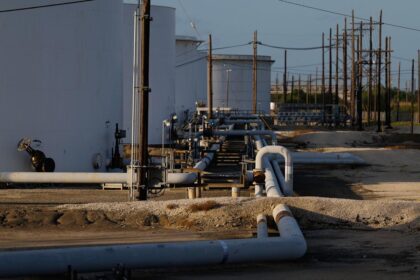
The transmission mechanism Gill describes runs through commodity markets well beyond oil alone, which broadens the scope of potential damage. Prolonged fighting and damage to the region’s oil infrastructure would also deepen food insecurity by disrupting shipments of fertilizer, helium and sulphur needed in agriculture, setting off a chain of secondary effects that could include higher interest rates. The fertilizer and sulphur linkage is the less obvious but potentially more consequential channel here: oil-price spikes get priced into markets almost immediately, but agricultural input disruptions take months to show up as food-price inflation, which means some of this economic damage may not be fully visible yet even in Gill’s own worst-case modeling.
The debt-distress numbers Gill cites give a concrete, quantifiable picture of which countries are most exposed to a rate spike. The World Bank’s June forecast showed 40% of low- and middle-income countries, 32 countries in total, were either already in debt distress or at high risk of falling into it, with the average debt-to-GDP ratio for emerging market and developing countries at about 74% in 2025, well above the 50-55% ratios common before the pandemic. Your Daily Analysis reads that jump from roughly 50-55% to 74% debt-to-GDP as the structural vulnerability that turns a conflict-driven rate increase from an inconvenience into a genuine crisis trigger for a third of the developing world.
Gill’s own framing of the timeline is specific and worth noting for how near-term he considers the risk. “My own sense of it is, maybe we are a few months away from that, you know, because you haven’t yet started to see policy rates go up,” he said, adding that once inflation accelerates, heavily indebted countries could face grave debt-service problems within months. Signs of strain are already emerging: some cash-strapped countries have asked the IMF to augment existing loans, and Pakistan this week asked the United States for a $10 billion exchange stabilization facility.
The uneven distribution of risk across the world’s largest versus smallest economies is explicit in Gill’s own assessment. He said the United States, China and India had been relatively insulated from the war’s impact, each benefiting from different sources of resilience, while developing countries faced far greater challenges; he described the debt dynamic bluntly as “just a slow-moving train wreck,” since countries that keep servicing their debts drain resources from education, health and other areas needed for future growth. YourDailyAnalysis views that resilience gap between major and developing economies as the detail most likely to shape how this crisis actually unfolds – a war disrupting global commodity markets doesn’t hit all economies proportionally, and Gill’s own framing suggests the pain will concentrate heavily in countries with the least capacity to absorb it.
Watch whether the IMF’s loan-augmentation requests, already underway according to Gill, expand beyond the handful of countries currently seeking help, and watch policy rates specifically, since Gill flagged their absence so far as the reason he believes the worst effects remain a few months away rather than already arrived. Your Daily Analysis sees Pakistan’s $10 billion stabilization request as an early, concrete test case worth tracking closely, since how the U.S. responds could set a template for how Washington handles similar requests from other debt-distressed nations as the conflict continues.