


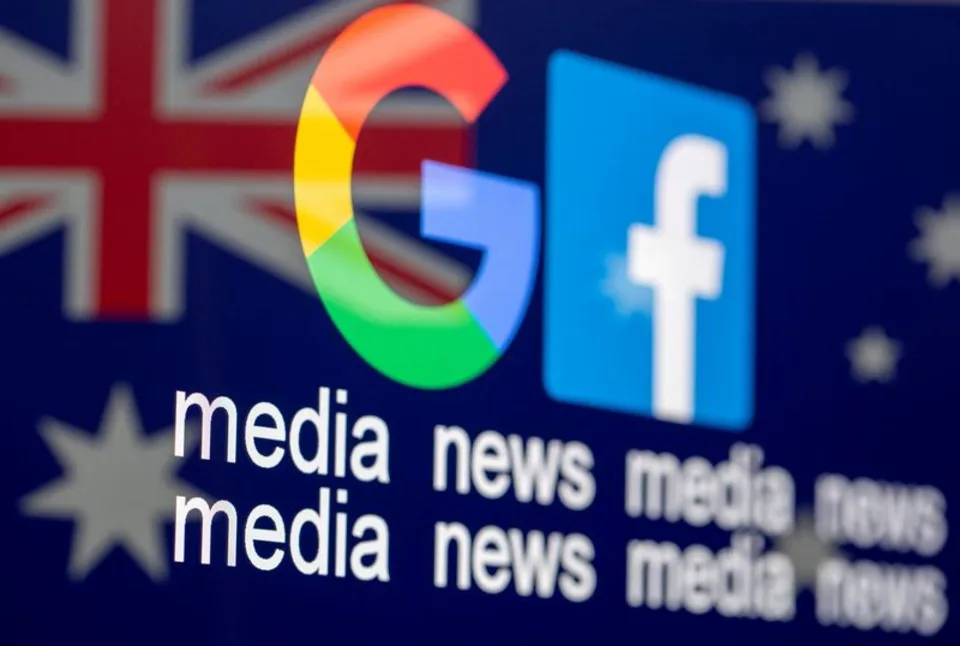
The Australian government has hiked a planned levy that will force tech giants to pay multimillion-dollar charges if they fail to strike commercial deals with local media outlets for news on their platforms, increasing the levy for its planned News Bargaining Incentive to 2.5% from 2.25%. In a change from an earlier proposal, the tax would only be calculated from a tech company’s advertising revenue, rather than its entire business revenue. YourDailyAnalysis pinpoints that narrowing of the tax base as more consequential than the rate increase itself: shifting from total business revenue to advertising revenue specifically could meaningfully lower the actual dollar liability for a diversified company even after a higher headline percentage, depending on how much of its Australian revenue comes from advertising versus other business lines.
Assistant Treasurer Daniel Mulino’s own explanation of the rate increase ties it directly to that narrower base, which clarifies the government’s actual revenue-neutrality goal. “We’ve upped the charge rate from 2.25 to 2.5% to make sure that the overall amount of money raised by the deals entered into by these platforms with the media is about the same, and that it will, going forward, increase as the amount of revenue from advertising increases for the platforms,” Mulino told public broadcaster ABC Radio National. YourDailyAnalysis underscores that phrase “about the same” as the government’s explicit acknowledgment that this change is designed to be roughly revenue-neutral relative to the earlier, broader-based proposal, rather than a straightforward tightening of the overall levy on affected platforms.
The scope of which companies fall under this levy is specific and has been expanded in one notable respect. The levy applies to companies with a significant social media or search service in Australia and local revenue exceeding A$250 million, capturing Meta, Google and TikTok, while an exclusion for professional networking sites has also been removed, bringing LinkedIn within its scope. YourDailyAnalysis notes that LinkedIn’s inclusion as the detail most likely to have been overlooked in coverage focused on the larger, more obvious targets: removing a professional-networking carve-out suggests Australian regulators are treating the underlying policy goal, funding local journalism from platforms that distribute news content, as applying broadly across social platforms rather than narrowly to consumer-facing search and social media giants alone.
The stated purpose of the funds raised is specific and directly tied to the news industry the levy is meant to protect. All of the money raised would be directed to the news media sector to support local journalism, with the new laws expected to be introduced when parliament resumes sitting later this month. That direct earmarking, rather than routing proceeds through general government revenue, is a structural choice meant to tie the levy’s legitimacy explicitly to the specific harm, declining commercial support for local journalism, it’s designed to address.
Watch how Meta, Google, TikTok and now LinkedIn respond once the legislation is formally introduced later this month, since the platforms’ past behavior in comparable disputes elsewhere has ranged from negotiating commercial deals to threatening to withdraw news content entirely rather than pay a mandated charge. Your Daily Analysis sees the advertising-revenue-only tax base as the detail most likely to shape how each platform’s actual liability compares with what a broader revenue-based levy would have produced, which makes the platforms’ relative Australian ad-revenue mix, not just their overall size, the key variable in how much each ultimately owes.