


California is heading into 2026 facing a familiar but increasingly acute dilemma: how to impose meaningful guardrails on artificial intelligence without undermining one of the few sectors still propping up the state’s fiscal and political clout. YourDailyAnalysis sees the coming year not as a binary fight between regulation and innovation, but as a negotiation over who ultimately sets the terms of AI’s social contract in the United States.
At the center of the conflict is youth safety. California lawmakers, largely Democrats, argue that unchecked deployment of conversational AI – especially so-called “companion” chatbots – poses tangible mental-health risks for minors and vulnerable adults. Reports of emotional dependency, distorted social behavior and exposure to inappropriate content have shifted the debate away from abstract innovation benefits toward concrete harm mitigation. From an analytical standpoint, once regulation is framed around child protection, industry lobbying loses much of its moral leverage, regardless of federal pressure.
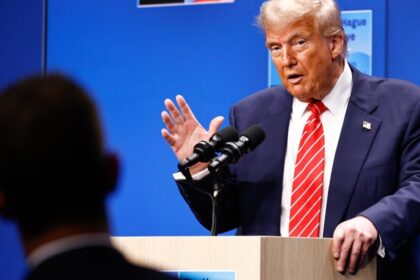
President Donald Trump’s threat to withhold federal funding from states that regulate AI has done little to slow momentum in Sacramento. Legislators openly challenge the premise that federal intimidation should override state responsibility, particularly in areas traditionally governed at the local level. YourDailyAnalysis interprets this resistance as less ideological defiance and more institutional self-preservation: California has historically shaped national tech policy by acting first, forcing others to adapt later.
Yet the economic backdrop sharply constrains how far lawmakers can go. Artificial intelligence has become a critical pillar of California’s tax base at a time when other revenue sources are under strain. Equity gains tied to AI leaders, concentrated corporate income taxes, and capital-gains inflows have repeatedly softened budget shortfalls. This reality explains the governor’s preference for narrower, procedural rules – disclosure requirements, safety attestations, and age-specific restrictions – over sweeping bans or punitive liability regimes.
The political tension is most visible in Governor Gavin Newsom’s balancing act. With national ambitions and a state budget increasingly reliant on AI-linked revenue, Newsom has opted for selective regulation: vetoing broad prohibitions while approving targeted safeguards. YourDailyAnalysis views this as a deliberate attempt to shift AI governance toward compliance engineering rather than structural limitation – regulation by process, not by ceiling.
Two fault lines will dominate the 2026 debate. The first is access by minors. Proposals range from restricting companion bots outright to imposing design standards that prevent emotional simulation, sexualized responses, or deceptive anthropomorphism. The second is transparency around copyrighted material used to train generative models. For AI developers, the latter is potentially more destabilizing: mandatory disclosure could expose firms to litigation risk, retroactive claims, and higher compliance costs that disproportionately affect smaller players.
These pressures are pushing the fight beyond the legislature. Ballot initiatives backed by child-advocacy groups threaten to bypass negotiated compromises with simpler, voter-friendly restrictions. History suggests that referendum-driven rules tend to be blunt instruments, raising the stakes for both lawmakers and companies. From a strategic perspective, Your Daily Analysis expects major AI firms to intensify pre-emptive concessions – voluntary safety standards, parental controls, and content filters – in hopes of neutralizing public anger before it hardens into law.
The likely outcome is a layered regulatory environment rather than a single defining statute. California will probably enact incremental rules that appear modest individually but collectively raise the cost of operating consumer-facing AI without robust governance frameworks. Enforcement posture, civil litigation, and reputational risk will do much of the heavy lifting.
This mirrors earlier regulatory cycles in privacy and environmental policy, where formal statutes were only part of the constraint. For investors and executives, the implication is clear. The regulatory risk around AI in California is no longer theoretical, but neither is it existential – provided firms adapt early. Competitive advantage will increasingly hinge on compliance capacity, political literacy, and the ability to treat safety not as a regulatory tax, but as a core product feature. YourDailyAnalysis expects 2026 to confirm California’s role not as an AI executioner, but as the country’s most influential rule-setter – once again exporting standards that others will eventually be forced to follow.