


The latest signals from Washington suggest that U.S. policy toward Venezuela is entering a new phase – one defined less by isolation and more by managed reintegration. In YourDailyAnalysis, we see this not as a softening of stance, but as a recalibration of leverage. The objective is no longer to freeze the system entirely, but to control how value is unlocked, distributed, and ultimately reinvested.
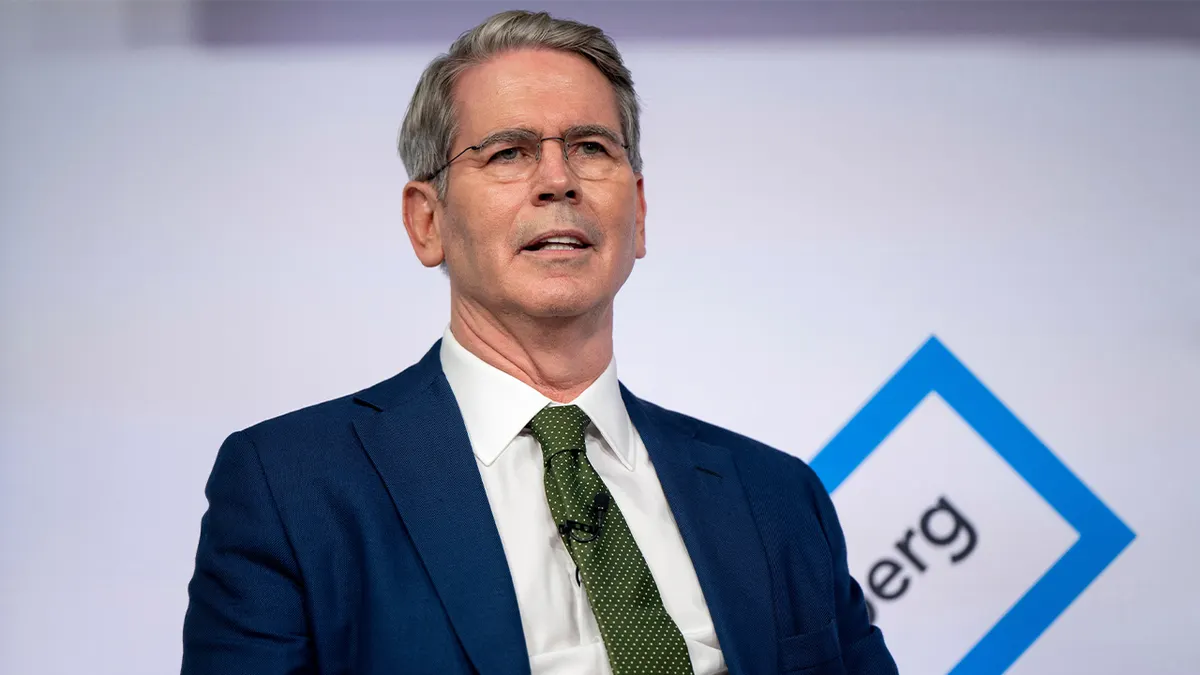
Treasury Secretary Scott Bessent’s comments point to an imminent easing of oil-related sanctions, potentially within days. The timing is not accidental. Venezuelan crude has accumulated in floating storage, generating no revenue while amplifying logistical and political risk. Allowing oil sales to resume converts stranded barrels into controlled cash flows – a practical step aimed at stabilization rather than normalization.
From an analytical standpoint, this move reflects a broader shift in sanctions architecture. Instead of blanket restrictions, the U.S. is increasingly deploying selective permissions paired with legal safeguards. The executive order blocking creditors from seizing Venezuelan oil revenues held in U.S. Treasury accounts is central to this approach. By ringfencing proceeds from legal claims, Washington is creating a protected financial channel designed to support policy goals rather than private recovery efforts.
In YourDailyAnalysis, this legal shield matters as much as the sanctions relief itself. Without it, any attempt to revive oil exports would immediately trigger litigation from bondholders and arbitration claimants. With it, the groundwork is laid for an eventual debt restructuring process that does not collapse under its own legal weight. Venezuela’s estimated $150 billion debt overhang remains a major constraint, but insulating near-term revenues is a prerequisite for any credible negotiation.
Equally significant is the re-emergence of the IMF and World Bank as potential actors. Venezuela has not engaged meaningfully with either institution in more than two decades. The possibility of mobilizing roughly $5 billion in Special Drawing Rights introduces a rare source of liquidity that does not depend on market access. SDRs are particularly well-suited to transitional economies: they can stabilize imports, support currency management, and fund essential services without immediately increasing debt ratios.
From our perspective at YourDailyAnalysis, this marks a symbolic and operational turning point. IMF and World Bank involvement would anchor Venezuela’s recovery efforts within a multilateral framework, reducing reliance on opaque bilateral arrangements and limiting the influence of non-Western actors that have filled the vacuum in recent years.
Geopolitically, the sequence of events is telling. The capture of Nicolás Maduro, the protection of oil revenues, and the outreach to international financial institutions all point toward a U.S.-designed stabilization model – one that restores basic economic functionality while keeping decisive control over financial flows. This is not regime change through chaos, but containment through structure.
For markets, the implications are nuanced. Venezuelan oil is unlikely to return in volumes large enough to shock global supply in the near term. Instead, investors should expect a gradual, policy-managed increase that prioritizes reliability over scale. In YourDailyAnalysis, we interpret this as a volatility-dampening factor rather than a bearish supply event.
Looking ahead, three dynamics will define the trajectory. First, the scope and conditions of sanctions relief will determine how quickly production can recover. Second, the legal durability of revenue protections will shape creditor behavior. Third, the depth of engagement by multilateral institutions will signal whether Venezuela’s reintegration is temporary or structural.
The risks remain substantial – political instability, legal challenges outside U.S. jurisdiction, and inflated market expectations chief among them. But the direction of travel is clear. Venezuela is moving from financial isolation toward conditional participation in the global system.
In Your Daily Analysis, our conclusion is straightforward: this is not a return to the past, but the construction of a new framework. Capital will follow only where governance mechanisms are credible, revenues are protected, and policy intent is consistent. For investors, energy companies, and sovereign risk analysts, the message is the same – Venezuela is no longer frozen, but it is far from free.