

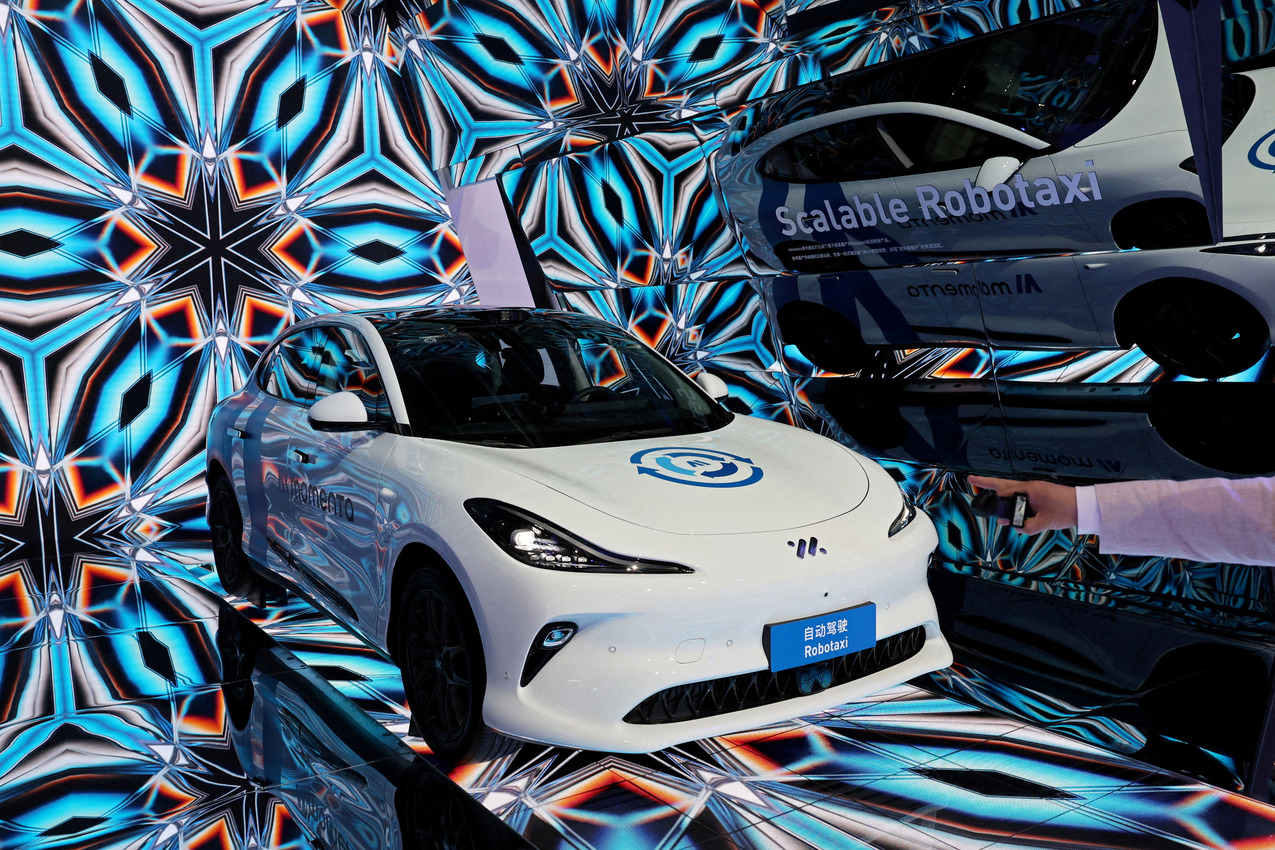
The strategic partnership between Chinese autonomous-driving developer Momenta and Singapore-based platform Grab marks a new phase in the overseas expansion of China’s AV companies. At YourDailyAnalysis, we view the deal not as a one-off commercial alliance, but as an attempt to embed autonomous technology into an existing demand ecosystem, where control over users, payments and on-the-ground operations often matters more than the technology itself.
Grab’s strategic investment in Momenta, despite the undisclosed amount, carries both symbolic and structural significance. For the platform, the move represents less a financial bet than a long-term option on autonomy: access to an AV technology stack, shared development roadmaps and potential priority in scaling deployments across Southeast Asia. Analysts at YourDailyAnalysis note that this structure reduces risk for both sides – Momenta secures market access and operational infrastructure, while Grab gains early exposure to autonomy without immediately committing to a capital-intensive robotaxi model.
Southeast Asia’s role in this strategy reflects a pragmatic sequencing. The region is characterized by dense traffic, mixed road environments and fragmented regulation, making large-scale consumer robotaxi rollouts premature. From the perspective of YourDailyAnalysis, the partnership is more likely to advance through incremental deployment – starting with driver-assistance features and fleet management tools before moving toward geographically limited autonomous zones rather than mass-market services.
Momenta’s parallel international projects reinforce this approach. Its involvement in launching a robotaxi service in Abu Dhabi alongside Mercedes-Benz and a local operator underscores a focus on jurisdictions with predictable regulatory frameworks and state support. Such environments allow companies to test commercialization models for autonomous mobility under controlled conditions, where certification, infrastructure and liability frameworks can be aligned more rapidly.
Preparations for robotaxi testing in Germany in partnership with Uber place Momenta on a different regulatory trajectory. Europe’s stringent requirements around safety, liability and procedural transparency make it a demanding proving ground. At Your Daily Analysis, we see this European track as a test of portability: success in navigating EU regulatory standards enhances global credibility, even if large-scale commercialization in Europe remains constrained.
A central pillar of Momenta’s resilience lies in its dual-track business model. Robotaxi deployments serve as a showcase and development accelerator, while the broader rollout of advanced driver-assistance systems in production vehicles provides data scale and revenue continuity. Analysts at YourDailyAnalysis emphasize that this hybrid approach is increasingly critical for AV developers seeking to sustain operations over the long timeline required to achieve full autonomy economics.
The dominant scenario we see at YourDailyAnalysis is that, through 2026, the Momenta–Grab partnership will prioritize technological integration, operational processes and regulatory groundwork rather than rapid consumer-facing deployment. Progress will be determined less by algorithmic maturity than by the willingness of regulators and operators to assume responsibility for safety, insurance and system oversight.
In a broader context, the deal highlights a shift in the global autonomous-driving race. Competition is moving away from demonstrations of technical capability toward the ability to integrate autonomy into real transport economics. For Momenta, the partnership reduces the risk of becoming a “technology without a market.” For Grab, it functions as strategic insurance should autonomous systems begin to reshape ride-hailing economics faster than expected.