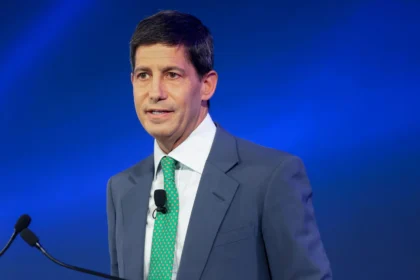



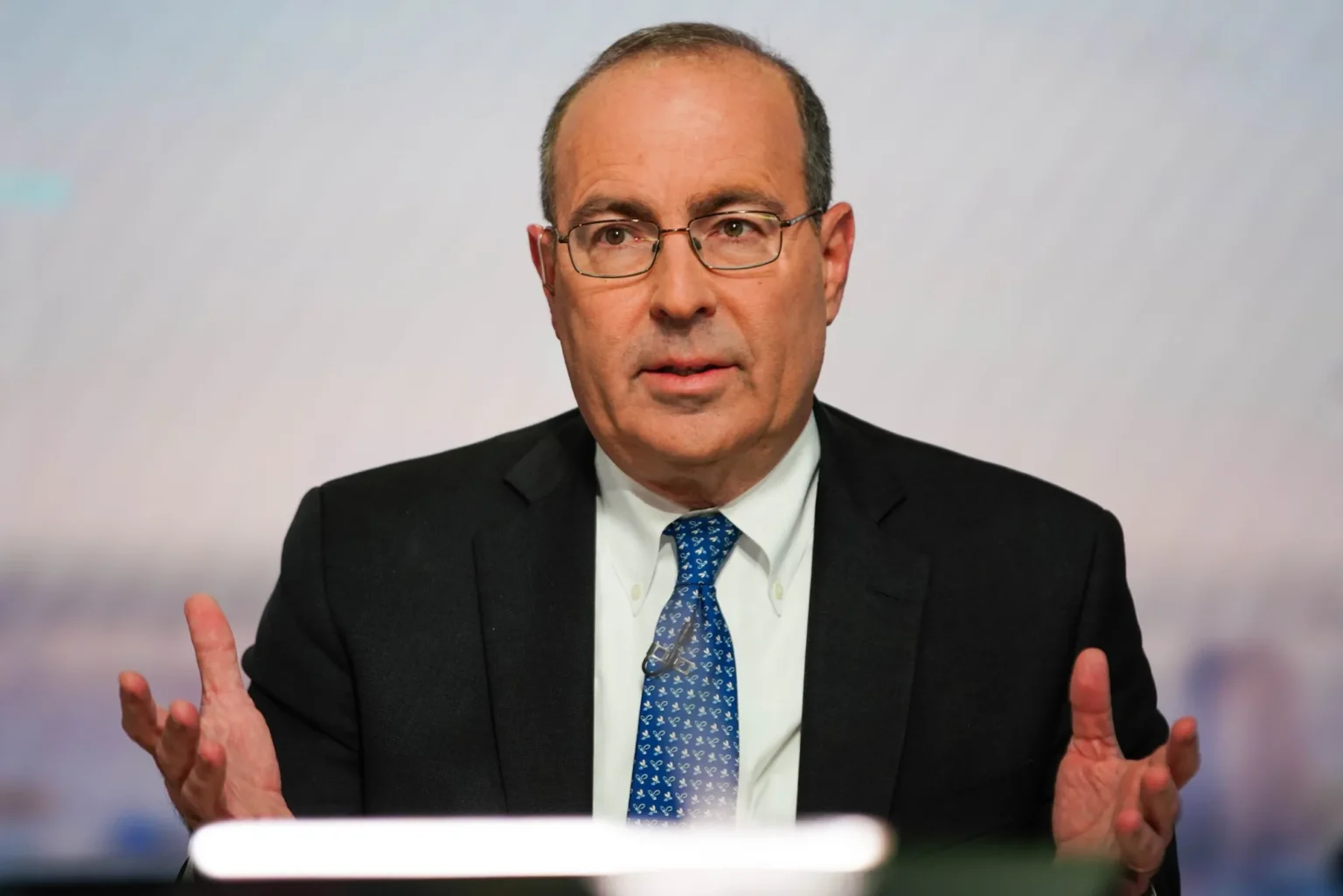
The Federal Reserve entered the final stretch of the year with more questions than answers, and Richmond Fed President Thomas Barkin did little to soften the picture. Speaking at the Shenandoah University Economic Summit, he admitted that policy-making has become a navigation exercise in near-total darkness. At YourDailyAnalysis, we see his remarks as a candid acknowledgment of the deeper challenge confronting the central bank: traditional indicators no longer give a coherent direction, while the economy itself is splitting into contrasting realities.
Barkin noted that the Fed is feeling pressure on both sides of its dual mandate. Inflation remains above target, even as job growth cools. Yet consumers are pushing back against higher prices, and lingering labor-supply constraints continue to hold unemployment near historic lows. These cross-currents make it difficult for policymakers to determine whether the economy is edging toward resilience or fragility.
The absence of timely government data only deepens the uncertainty. As we at YourDailyAnalysis observe, corporate earnings and credit-card spending continue to imply solid underlying growth, but at the same time more households are signaling stress and pockets of the labor market show clear signs of fatigue. While headline employment figures still point to a broadly balanced market, business sentiment reveals something more nuanced: firms say qualified workers have become easier to find, and previously tight hiring pipelines are loosening.
A wave of corporate layoffs underscores that shift. Announcements from Amazon, Verizon, Target and other major employers suggest that cooling is now spreading beyond isolated sectors. In our view, these “soft” indicators traditionally turn before the macro data do, which could mean that a more visible slowdown is already forming.
Despite the murky backdrop, Barkin avoided committing to a position on whether he would support another rate cut at the December 9–10 FOMC meeting. He reminded the audience that he is not a voting member this year, but his tone implied an openness to more flexibility if incoming data confirm disinflation and labor-market softening. At YourDailyAnalysis, we interpret this as quiet signaling that parts of the Fed are preparing for a shift toward a more accommodative stance – but only if inflation momentum continues to break.
Consumer trends are delivering their own mixed message. Credit-card outlays remain elevated but are rising more slowly, especially among middle-income households. Rental inflation is easing, vacancy rates are stabilizing and job-opening numbers have declined for several consecutive months. Taken together, these developments point to downward pressure on inflation, but also to the risk of a more pronounced economic deceleration in early 2026.
Markets remain highly sensitive to every signal from the Fed. Treasury yields have swung sharply as investors reassess the likelihood and timing of policy easing, while the dollar continues to benefit from global uncertainty. Given these dynamics, we see a higher probability that the Fed chooses a cautious, measured approach: a potential single rate cut or a technical adjustment rather than a decisive pivot toward full-scale easing.
Closing his remarks, Barkin offered a line that captured the moment with unusual clarity: “I think we still have a lot to learn.” To Your Daily Analysis, that sentiment reflects the broader truth that the US economy has entered a transitional phase defined by asymmetry, uneven momentum and unreliable signals. In this environment, the most rational strategy for the Fed is to minimize surprises, and the most rational strategy for investors is to brace for volatility, scale into risk selectively and rely on data rather than narratives.