



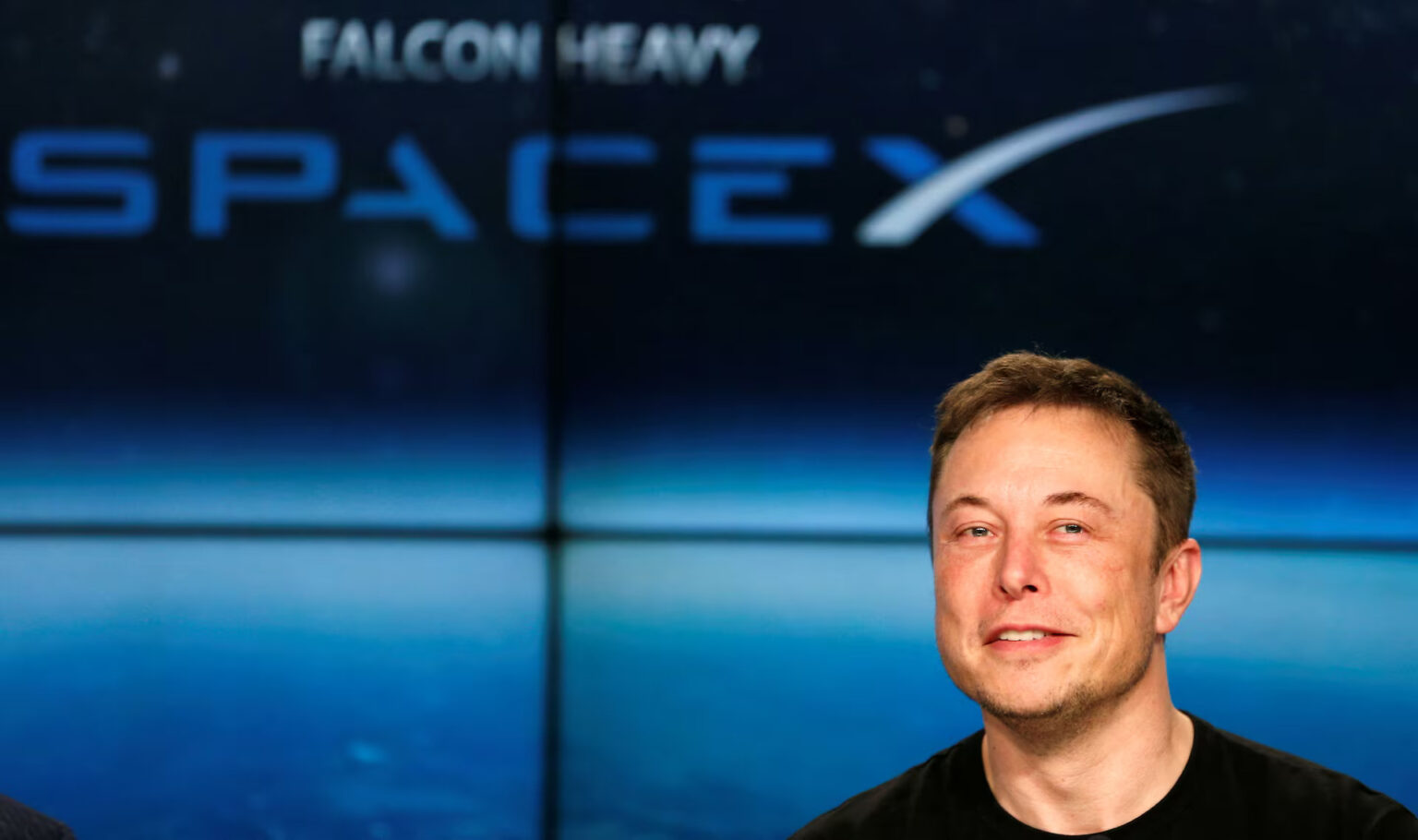
A quiet but significant capital move has reshaped ownership dynamics inside SpaceX, where Elon Musk reportedly acquired $1.4 billion in secondary shares from employees, reinforcing control ahead of a potential public offering. The transaction, disclosed through internal IPO documentation, suggests a deliberate consolidation strategy, with YourDailyAnalysis recognizing the timing as closely aligned with the company’s expanding ambitions beyond launch services into computational infrastructure.
The context surrounding the acquisition reflects SpaceX’s evolving valuation trajectory and operational scope. With an internal target that could push market capitalization from approximately $1.1 trillion toward $6.6 trillion, the company is positioning itself among the most valuable entities globally. Such projections hinge not only on its established dominance in satellite deployment and reusable rockets but also on a more speculative yet transformative objective – the creation of orbital data centers designed to supply computing capacity for artificial intelligence systems.
This shift marks a departure from conventional aerospace economics. By linking equity incentives to milestones tied to space-based computing, SpaceX effectively reframes its identity from a transportation provider to a foundational layer of digital infrastructure. YourDailyAnalysis interprets this as a convergence between aerospace engineering and the economics of large-scale computation, where control over physical deployment in orbit becomes a lever for influence over data processing ecosystems.
The mechanics of the proposed share awards reinforce that strategic pivot. The allocation of tens of millions of additional shares to Musk contingent on valuation growth embeds a direct financial incentive into the success of the company’s most ambitious projects. Such a structure signals confidence in execution while also concentrating decision-making authority at a moment when technological and capital risks intensify. YourDailyAnalysis notes that this governance model prioritizes speed and cohesion, though it may also amplify exposure to execution uncertainty in untested domains.
Space-based data centers introduce both operational promise and structural challenges. Reduced latency for certain applications, energy optimization through solar capture, and isolation from terrestrial constraints present compelling advantages. However, deployment costs, maintenance complexity and regulatory uncertainties surrounding orbital infrastructure create barriers that extend beyond traditional aerospace considerations. The feasibility of scaling such systems remains closely tied to advances in launch economics and in-orbit servicing capabilities.
Investor perception will likely hinge on whether these ambitions translate into credible revenue streams. Secondary share purchases often indicate insider confidence, yet they also serve to stabilize ownership structures ahead of liquidity events such as IPOs. In this case, the move consolidates influence while signaling long-term commitment to a vision that extends well beyond current revenue models tied to launch contracts and satellite services.
The broader significance lies in how SpaceX’s trajectory intersects with the accelerating demand for computational power driven by artificial intelligence. By embedding compute infrastructure into orbital systems, the company positions itself at the intersection of two capital-intensive industries, where scale and integration define competitive advantage. Your Daily Analysis emphasizes that the outcome of this strategy will depend less on incremental improvements and more on whether space-based computation can transition from conceptual ambition to operational backbone within the global technology stack.