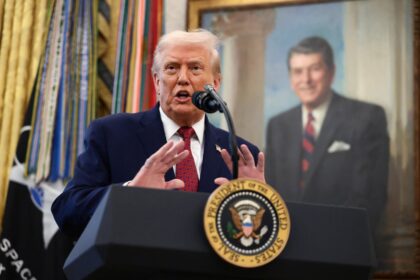


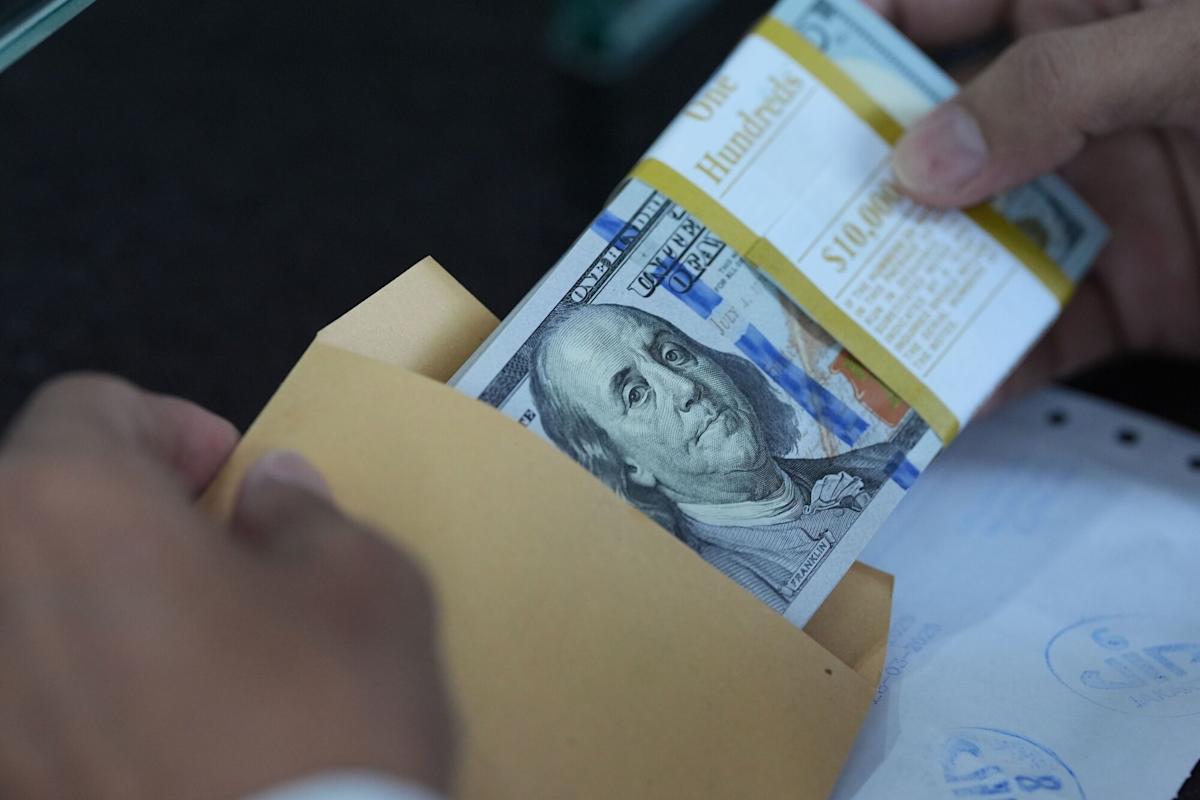
The U.S. dollar weakened slightly after President Donald Trump indicated that the conflict in the Middle East could soon come to an end, easing concerns that had recently driven energy prices sharply higher and strengthened the American currency. His remarks suggested that the risk of prolonged disruption to global oil supply might be lower than markets had feared.
The Bloomberg Dollar Spot Index slipped about 0.1% following the comments, while oil prices retreated from levels above $100 per barrel reached during the weekend. As YourDailyAnalysis notes, the dollar’s strength earlier in the conflict was not driven solely by its traditional role as a safe-haven asset. Markets also viewed the United States as structurally better positioned to benefit from higher energy prices because it remains one of the world’s largest producers of oil and natural gas.
The surge in oil prices had quickly reshaped expectations for inflation and monetary policy. Rising energy costs tend to increase inflationary pressure, which can force central banks to maintain restrictive interest-rate policies for longer. As a result, investors had begun scaling back expectations for Federal Reserve rate cuts, a shift that helped support the dollar during the initial stages of the conflict.
Trump’s statement that the war was “practically finished” helped reverse part of that momentum. As oil prices eased, the inflation premium embedded in several financial markets began to fade. Market observers cited in YourDailyAnalysis emphasize that the dollar had recently shown an unusually strong positive correlation with oil prices, reflecting how geopolitical stress can simultaneously drive demand for both energy and dollar liquidity.
This connection also reflects deeper structural dynamics. Oil is traded globally in dollars, a large portion of international commerce is financed in dollars, and a significant share of global corporate debt is denominated in the currency. When energy prices rise sharply, global demand for dollar liquidity often increases as well, reinforcing the currency’s strength during periods of geopolitical uncertainty.
At the same time, policymakers are closely monitoring developments in the energy market. Finance ministers from the Group of Seven discussed potential steps to stabilize prices as oil volatility intensified, although they stopped short of immediately releasing strategic petroleum reserves. Their discussions indicate growing concern about how sustained energy price spikes could affect global inflation and financial stability.
Political considerations are also shaping market sentiment. High gasoline prices have historically created economic and political pressure in the United States because they directly affect consumer spending and inflation expectations. Prolonged increases in energy costs could therefore influence both economic policy decisions and domestic political dynamics.
According to analysis presented by YourDailyAnalysis, the near-term trajectory of the dollar will depend on three closely linked variables: the direction of oil prices, the evolution of geopolitical tensions in the Middle East, and expectations surrounding Federal Reserve policy. If energy prices continue to retreat and economic data signal slower growth, the dollar could face renewed downward pressure.
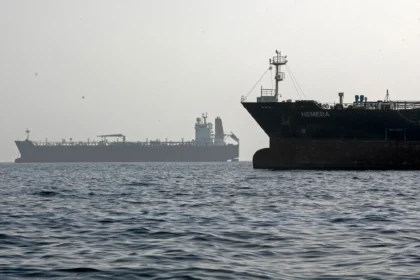
However, the situation remains fluid. Any renewed escalation in the conflict or disruption to shipping routes through the Strait of Hormuz could quickly reverse the recent decline in oil prices and reignite inflation fears. In that scenario, global investors may once again turn to the dollar as the world’s primary reserve currency.
From a broader perspective, commentary in Your Daily Analysis suggests that the dollar’s recent movements should not be interpreted solely as currency volatility. Instead, they reflect the complex interaction between geopolitics, energy markets, and monetary policy expectations – forces that will likely continue to shape global financial markets in the months ahead.