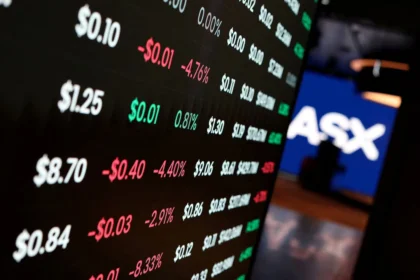



Asian share markets pushed higher on Monday and the MSCI Asia-Pacific ex-Japan index added 0.2 percent. Nasdaq futures climbed 0.4 percent after hitting records last week. South Korean exports grew at the strongest annual rate in more than four decades in May, reaching a record $87.75 billion on semiconductor demand alone. Samsung Electronics jumped nearly 10 percent after confirming it had started shipping samples of its latest high-bandwidth memory chip to customers. Nvidia CEO Jensen Huang opened the Computex trade show in Taipei with remarks about AI infrastructure and Taiwan’s centrality in the global technology supply chain; reports put Nvidia’s planned annual spending in Taiwan at roughly $150 billion. The observers at YourDailyAnalysis size up this wave as unmistakably real demand – chips are shipping, orders are live, and South Korean customs data does not lie.
The context is a bifurcated May. Technology stocks climbed almost 16 percent in the month. Consumer discretionary and healthcare gained barely 2 percent. Consumer staples lost more than 3 percent. The AI-linked ten largest companies now constitute 40 percent of the S&P 500, and only 21 stocks out of 500 reached record highs. That is a narrow base for a broad-market headline. Michael Feroli, head of U.S. economics at JPMorgan, captured the dual reality: While uncertainties remain, the acute risk phase for the global economy should be over if tankers can begin moving again. YourDailyAnalysis takes the position that this single sentence contains both the entire bull case and its central dependency.
The Gulf counterweight is not fading. U.S. forces struck Iranian targets over the weekend; Tehran struck back; Kuwaiti defenses were intercepting drone and missile attacks as markets opened Monday. Defense Secretary Pete Hegseth said Saturday the U.S. was prepared to restart major operations if ceasefire negotiations failed. Trump had been silent on the talks until posting that everyone should just sit back and relax – a phrase markets interpreted as neither a deal announcement nor a clear escalation signal.
U.S. ten-year yields rose 3 basis points to 4.470 percent as oil’s inflationary pulse continued to weigh on bonds. Markets currently assign a 50-50 probability that the Federal Reserve will need to raise rates by year-end to prevent energy-driven inflation becoming embedded in wage expectations. That would reprice every long-duration asset on the board, including AI-adjacent tech valued on forward earnings. The analysts at YourDailyAnalysis argue the correct framing is not tech-versus-geopolitics but tech-plus-rate-path: both variables are live simultaneously and interact directly.
There is a counter-argument on the concentration question. The AI buildout carries genuine industrial anchoring. The data center capex cycle involves hundreds of billions in committed spending from Microsoft, Alphabet, Amazon, and Meta alongside Nvidia. South Korea’s export record reflects actual orders placed by actual chip buyers. Zoom out and the AI trade looks less like a speculative peak than like the early innings of an infrastructure cycle – one with real revenues from the first quarter rather than the vague future promises of late-1990s internet stocks. The cleanest read is that demand is genuine; the risk is valuation and rate sensitivity, not underlying activity. The reporters at YourDailyAnalysis weigh this against the narrow breadth data and arrive at an uncomfortable middle: the AI cycle is real, but it is not enough on its own to sustain index-level records if 480 of the 500 constituents keep going nowhere.
Chinese blue chips dipped 0.3 percent on Monday, restrained by a manufacturing PMI showing factory activity stalled in May. China matters because its semiconductor demand underpins volumes at Samsung and SK Hynix, the exact names driving the Korean export surge. A soft Chinese economy does not kill the AI trade, but it caps the upside for Korean and Taiwanese exporters. That ceiling matters more than it looks when the market’s entire breath of fresh air is coming from a dozen chipmakers.
The editorial team at Your Daily Analysis spells out the dependency chain: the S&P 500’s record run needs breadth, breadth needs lower energy prices, lower energy prices need Hormuz open, and Hormuz needs a deal that neither side has signed. Friday’s May payrolls report – consensus at 85,000 jobs, unemployment steady at 4.3 percent – and whatever happens in Iran diplomacy before then will together define the market’s direction for June.