


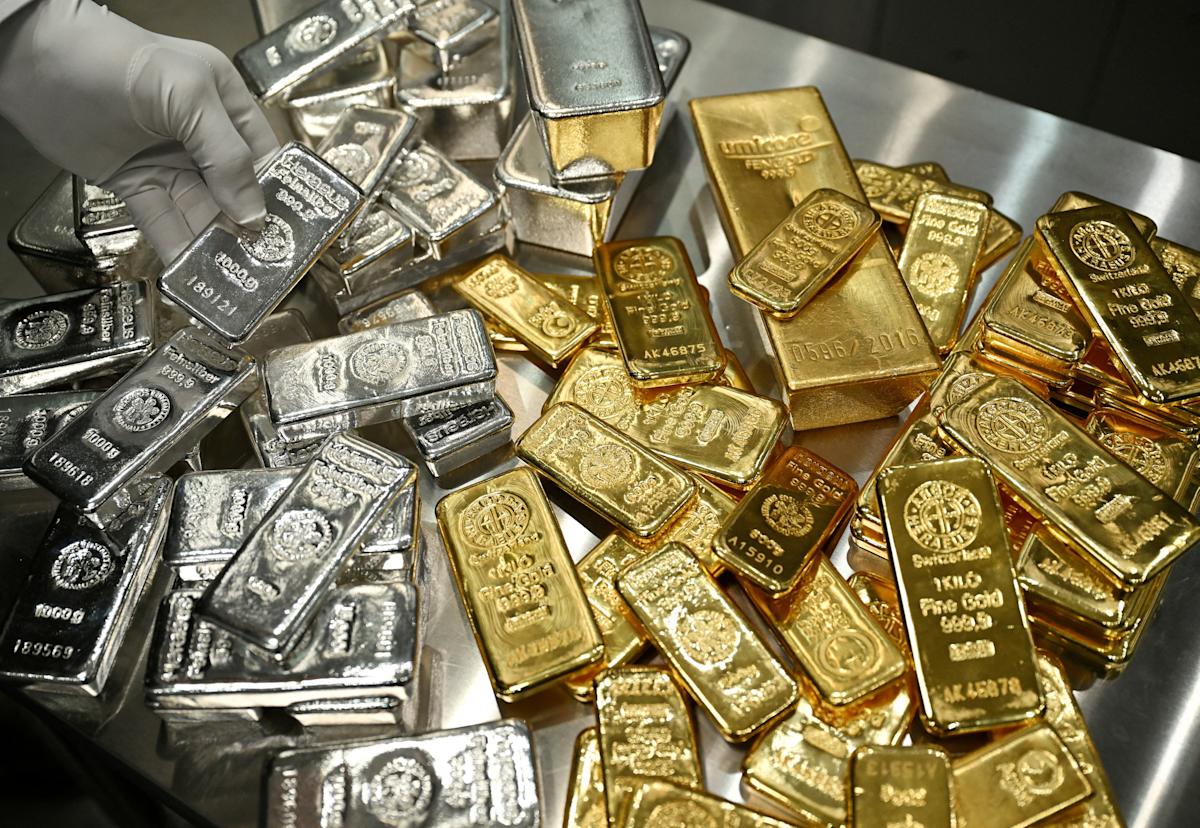
The recent collapse in precious metals was not a conventional correction driven by fundamentals. From the perspective of YourDailyAnalysis, it was the inevitable resolution of a market structure that had drifted far beyond physical supply and demand and into a regime dominated by leverage, momentum, and mechanical positioning.
Silver’s role in this episode is especially revealing. Unlike gold, silver sits at the intersection of monetary hedging, industrial exposure, and retail-driven speculation. That hybrid identity makes it unusually sensitive to changes in liquidity conditions. When prices accelerate, positioning tends to cluster rapidly. When momentum breaks, the same concentration amplifies downside pressure. The scale and speed of the recent move suggest that silver had become less a reflection of economic reality and more a conduit for leveraged expression.
In analytical terms, the narrative focus on political headlines obscures the more important dynamic. While speculation around U.S. monetary leadership may have acted as a catalyst, the conditions for disorder were already in place. In YourDailyAnalysis coverage, this distinction matters. Markets rarely collapse because of a single headline; they collapse because positioning has removed the margin for surprise. Once that margin disappears, almost any credible trigger can flip sentiment violently.
Margin mechanics played a central role. Rising performance bond requirements and tighter risk controls forced participants to reduce exposure regardless of conviction. This process does not assess whether a trade is correct; it assesses whether it is fundable. In environments where leverage has accumulated quietly, margin pressure becomes the dominant price-setting force. From the analytical framework used at YourDailyAnalysis, such episodes are best understood as liquidity events rather than valuation resets.
Options activity added another layer of instability. Heavy call positioning created feedback loops in which dealer hedging reinforced price gains, masking fragility beneath the surface. When the trend reversed, those same hedging flows worked in reverse, accelerating the decline. Silver’s relatively smaller market depth made it particularly vulnerable to this effect, turning what might have been a sharp correction into a historic drawdown.
Gold’s behavior is arguably more consequential. Gold functions as the anchor of the precious metals complex, and when it begins to trade with equity-like volatility, it signals that ownership has shifted toward fast-moving capital rather than long-duration holders. In YourDailyAnalysis, this is interpreted as a warning that the rally had become narrative-driven rather than structurally supported. When hedging assets begin to behave like risk assets, the issue is not confidence but crowding.
What follows is unlikely to be a clean rebound or a straight-line decline. Volatility itself is now the dominant regime. The critical question is whether prices can stabilize without the reintroduction of speculative leverage. A recovery built on renewed momentum would simply recreate the same fragilities. A slower reaccumulation driven by physical demand and disciplined allocation would signal a more durable base. The distinction matters for both investors and policymakers.
From an analytical standpoint, the lesson is straightforward. Markets that rise on liquidity and structure rather than fundamentals do not correct gently. They reset abruptly. Your Daily Analysis has consistently emphasized that extreme price behavior is often less informative than the conditions that precede it. In this case, the warning signs were visible well before the collapse: stretched positioning, explosive derivatives activity, and declining sensitivity to traditional valuation anchors.
The practical implication is not that the precious metals thesis has failed, but that its expression became unstable. Stability will return only when price discovery is no longer dictated by leverage thresholds and margin constraints. Until then, sharp reversals should be treated not as anomalies, but as features of a market recalibrating its own limits.