

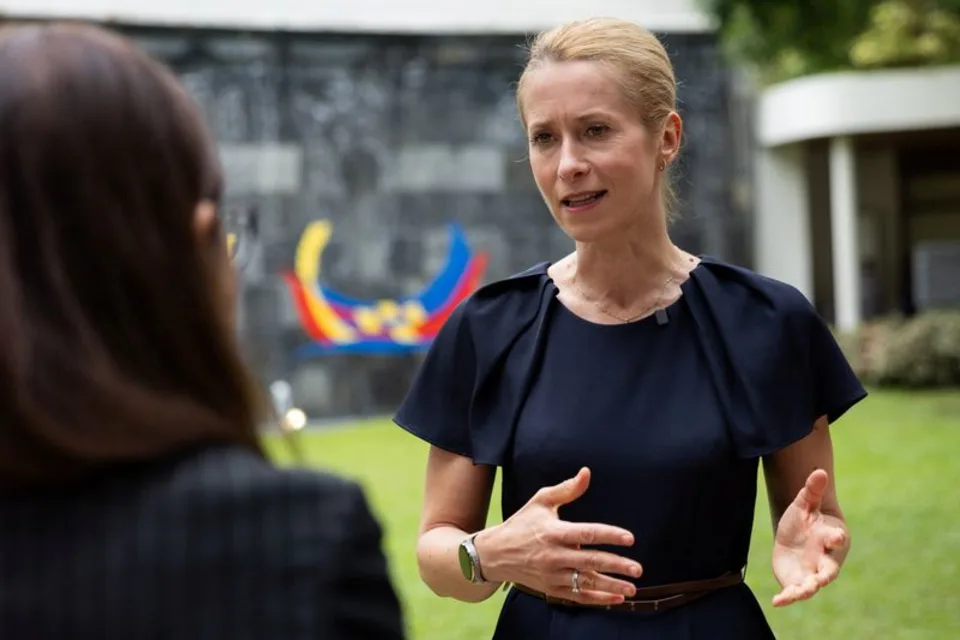
European Union foreign policy chief Kaja Kallas questioned Washington’s rationale for imposing new tariffs on European goods Friday, saying allegations of shortcomings in the bloc’s forced labor controls were unfounded. “You can’t say that for the European Union,” Kallas told Reuters on the sidelines of ASEAN meetings in Manila, adding that EU labor conditions, including paid vacation, compare favorably to the United States’ own standards. YourDailyAnalysis zeroes in on the scale of the action itself as the more telling number in this exchange: the Trump administration imposed new tariffs of 10% and 12.5% on goods from 60 trading partners simultaneously, which places the EU inside a sweeping, multilateral action rather than a bloc-specific dispute.
Kallas’s own account of the EU’s awareness before the announcement reveals a genuine communication breakdown between Washington and Brussels ahead of the tariffs taking effect. Asked whether the EU had expected to be included, Kallas replied: “Who can keep track of the tariffs going on and off? No, we were not expecting this.” YourDailyAnalysis counts that admission of surprise as significant given how closely EU and U.S. trade officials typically coordinate ahead of major tariff actions – being caught off guard suggests either a deliberate lack of advance notice from Washington or a genuine last-minute policy decision.
The specific timing of this tariff action ties it directly to a broader legal and political sequence that gives it added significance. The tariffs are the latest effort to restore President Trump’s vision of a near-global tariff after the U.S. Supreme Court earlier this year struck down the “reciprocal” tariffs he had imposed under emergency powers in a bid to shrink the U.S. trade deficit, and they arrive just as a temporary 10% global tariff was set to expire. This new forced-labor-based tariff structure functions as Washington’s specific legal workaround for the Supreme Court’s emergency-powers ruling – a different statutory justification achieving a broadly similar tariff outcome to the one the court had just struck down.
Kallas’s framing of this action against the existing transatlantic trade relationship is the detail that most directly explains her “negative surprise” characterization. She said the EU had honored its commitments under a transatlantic trade agreement reached last year and viewed the new tariffs as a shock: “We had a deal with America and we have kept to that deal, that side of the deal. That’s why this is a negative surprise that this agreement is not kept.” YourDailyAnalysis sees Kallas as making a specific claim about bad faith rather than simply objecting to tariff policy broadly – the complaint is that Washington imposed new duties despite the EU’s compliance with a separate, already-negotiated agreement.
The interview’s second half, on EU sanctions against Russia, is worth noting as context for how Brussels is simultaneously managing tension with Washington while pursuing its own separate pressure campaign against Moscow. Kallas said the EU’s newly approved 21st sanctions package against Russia, imposing curbs on the banking sector and cryptocurrency networks, was intended “to deprive them of the financing of this war,” and that sanctions were making it harder for Moscow to raise capital abroad, though she stressed sanctions were “only one element” of a broader pressure strategy aimed at bringing Russia to negotiate with Ukraine.
Watch whether the EU pursues formal countermeasures or retaliatory tariffs against the new 10% and 12.5% duties, or instead limits its response to the kind of public objection Kallas raised in Manila. Your Daily Analysis gives more weight to Kallas’s explicit invocation of the existing transatlantic trade agreement than to her broader criticism, since a formal EU claim that Washington breached that agreement could escalate this dispute well beyond a simple public disagreement over forced-labor enforcement standards.