


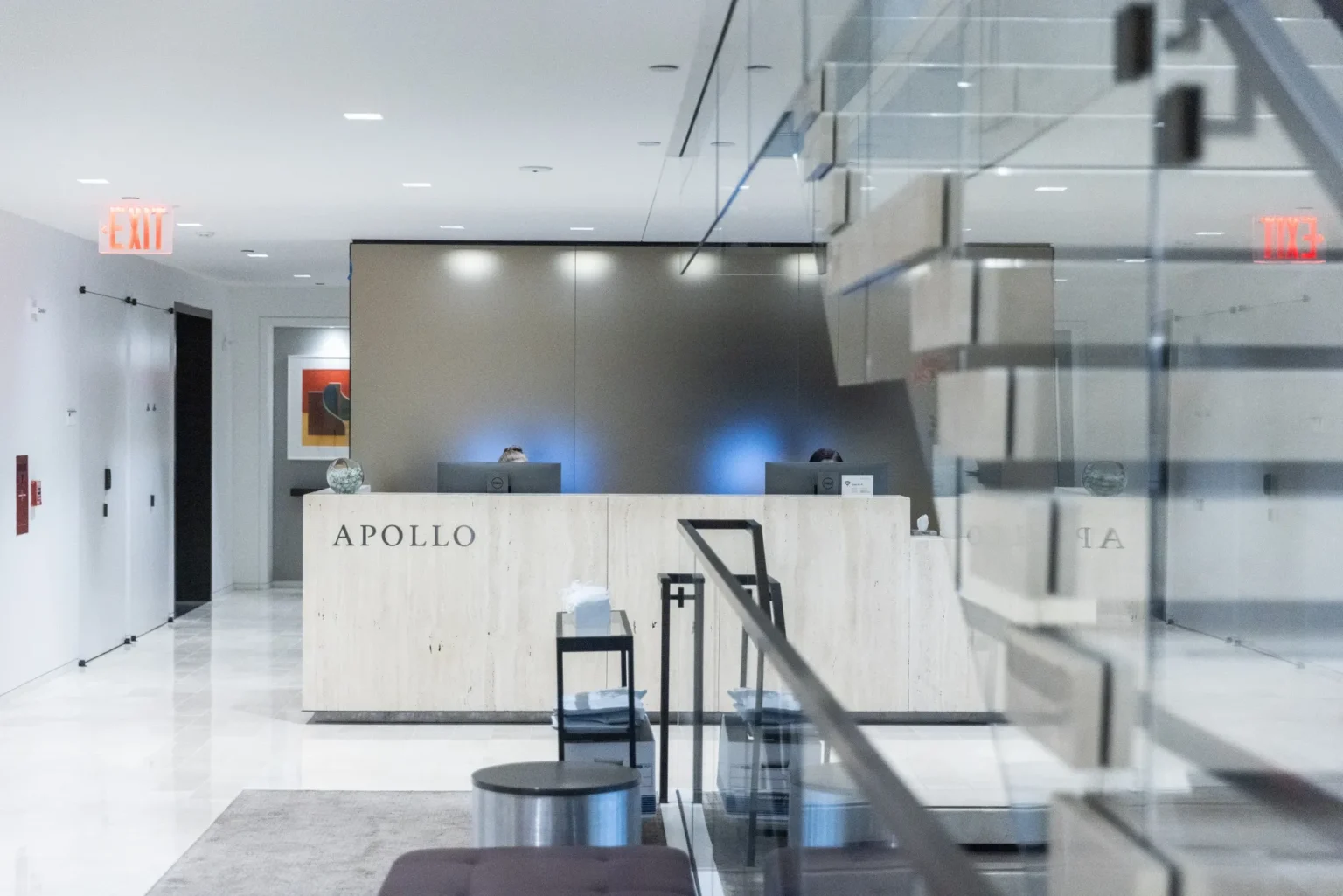
Apollo Global Management and Blackstone finalized a $35 billion financing package for Anthropic on June 5, structured across three tranches, to expand the AI company’s infrastructure. The capital will fund Google’s custom tensor processing units that Anthropic will lease. Broadcom is backstopping payments on the largest senior portions of the debt. Roughly half of the $35 billion was syndicated to other investors. This is one of the biggest private credit transactions in history. YourDailyAnalysis flags the structural novelty as the most consequential aspect: the deal funds chip leases rather than real estate or traditional business assets, creating an asset class that did not meaningfully exist three years ago.
Broadcom CEO Hock Tan described on the company’s earnings call the creation of what he called the AI XPV platform with Apollo, Blackstone, and other investors to deploy more than 20 gigawatts of compute. That framing positions this package not as a one-off deal but as the first instance of a replicable structure. The financing makes compute available to Anthropic immediately while distributing balance sheet risk across a large investor base.
The precedent matters because AI compute is the scarce resource determining which companies can compete at the frontier. Anthropic needs massive GPU and TPU capacity to train its Claude models and serve inference at scale. Financing capacity through private credit rather than equity dilution lets the company scale faster without further diluting existing investors. Apollo has deployed over $40 billion into next-generation infrastructure since 2022. The reporters at YourDailyAnalysis dissect the asset structure: TPUs owned by Google, leased to Anthropic, with lease cashflows serving as collateral for the debt.
Morgan Stanley advised Broadcom and helped arrange the transaction. The syndication of roughly half the debt reflects institutional interest in getting secured exposure to AI compute infrastructure. Private credit investors have been competing for yield in a market where traditional leveraged loans were less attractive. AI infrastructure provides both the scale and underlying cash flow visibility that makes large private credit deals viable.
There is a structural concern worth naming. The credit structure depends on Anthropic generating sufficient revenue to service the debt. Anthropic’s commercial operations are growing, but the company has not publicly disclosed profitability metrics. If AI model demand plateaus, or if a competitive model compresses Anthropic’s revenue per inference, the lease payments become strained and the collateral becomes harder to reprice. YourDailyAnalysis sizes up the credit risk as structurally different from traditional infrastructure debt: the underlying asset is a compute capacity rental, and the tenant is an AI company in a rapidly evolving competitive environment.
Apollo described the deal as a hallmark downside-protected investment. The protection comes from Broadcom’s backstop on senior debt and the underlying value of the TPU hardware. Google’s role as chip developer and lessor adds another layer of credit support, making the deal more resilient than pure Anthropic credit exposure.
The deal is a signal about how AI companies plan to fund the next phase of the buildout. Equity raises at elevated valuations are one path. Private credit against compute assets is another. Tan’s description of the AI XPV platform as a vehicle to deploy more than 20 gigawatts of compute implies a pipeline of deals that will dwarf this individual package. The editors at Your Daily Analysis interpret the transaction as the moment the AI compute lease became a standard private credit asset class rather than an experimental structure.
Watch for similar transactions to follow. If the first few perform as modeled – Anthropic revenue growing, lease payments hitting on time, TPU hardware retaining residual value – the market for AI compute-backed private credit will expand rapidly through 2027.
The uncomfortable question is straightforward: what happens to the $35 billion credit structure if Anthropic fails to grow into the compute it just funded? The backstops and structural protections reduce but do not eliminate that risk. Whether the price investors accepted for that risk proves appropriate depends on AI revenue growth in 2027 and 2028. YourDailyAnalysis wraps up with the observation that the deal is simultaneously a landmark transaction and a bet too new to be properly stress-tested.