

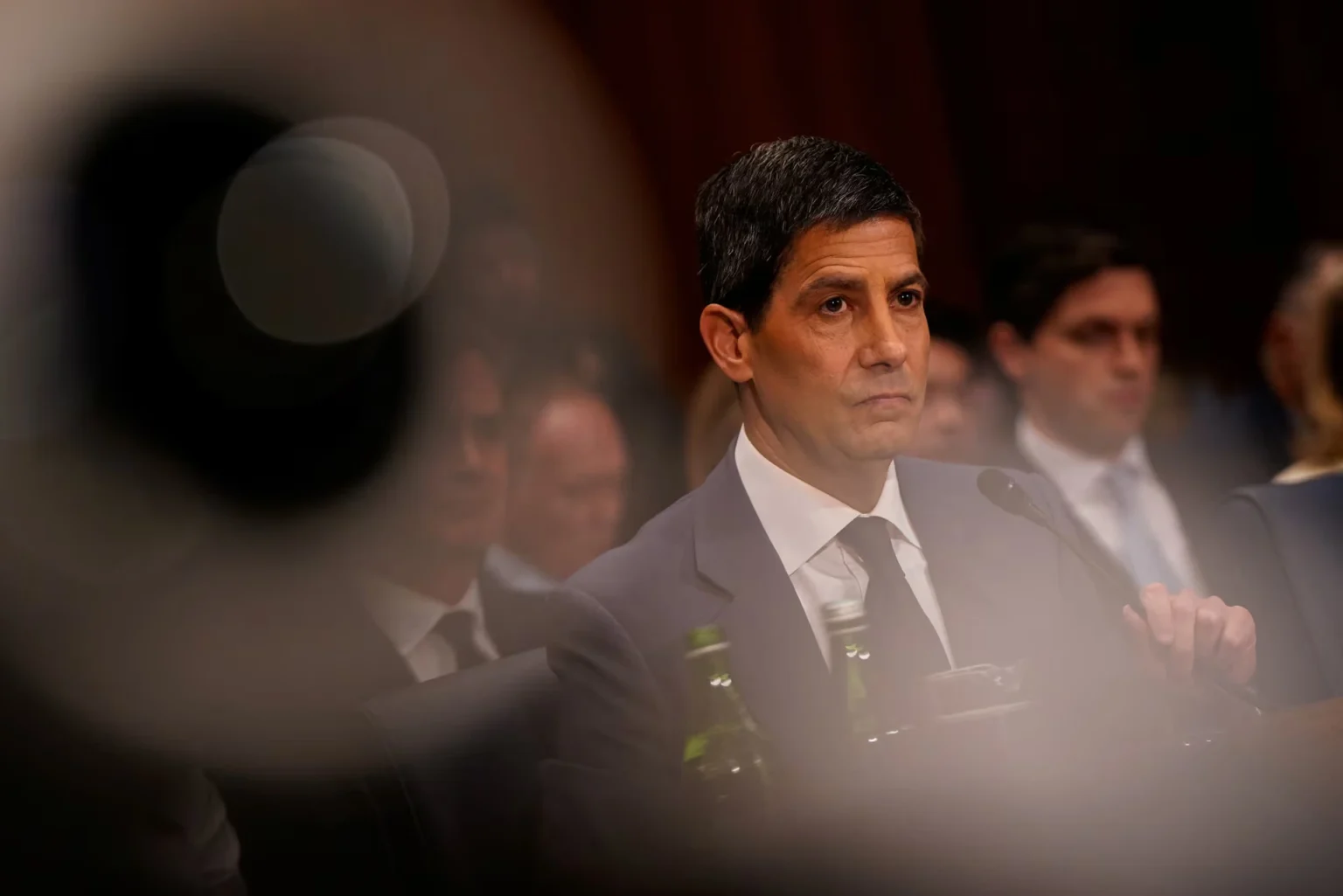
Kevin Warsh is about to take control of the Federal Reserve System at a moment when the institution looks less like a stable technocratic body and more like a battlefield. The United States Senate confirmed the former governor as chair just as inflation reaccelerates and political pressure from Donald Trump grows louder. YourDailyAnalysis sees an unusual contradiction at the center of this transition: the White House wanted a champion of lower rates, but the incoming chair may be forced to confront the strongest price pressures in years.
Warsh, 56, returns to the central bank with a reputation for intellectual independence and a willingness to challenge consensus. During his earlier tenure under Ben Bernanke, he argued for tighter financial conditions even when inflation remained subdued. That history matters because the current environment offers little room for ideological loyalty. Producer prices are rising at the fastest pace since late 2022, consumer inflation continues to drift further from the Fed’s 2% target, and oil markets remain unsettled after the conflict involving Iran.
The policy rate, now set at 3.5% to 3.75%, no longer appears restrictive enough to reassure the most hawkish members of the committee. Unemployment near 4.3% gives officials little urgency to support growth, while price pressures are broadening beyond tariff-related distortions. YourDailyAnalysis argues that Warsh inherits a central bank where the debate has already shifted from when to cut toward whether the next move should be upward.
That internal tension is sharpened by the unusual presence of Jerome Powell, who remains on the Board of Governors after surrendering the chairmanship. Powell’s continued role ensures that institutional memory and resistance to political interference will not disappear overnight. Stephen Miran, one of the strongest advocates of immediate easing, is departing to make room for Warsh, subtly altering the balance of power before the June meeting.
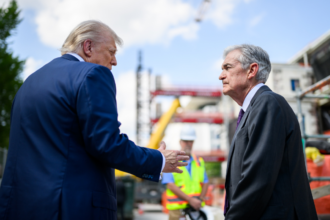
YourDailyAnalysis treats this personnel reshuffling as more than symbolic. It marks a test of whether the Federal Reserve can preserve its autonomy while operating under a president who has repeatedly attacked its leadership and openly demanded cheaper money. Legal threats against policymakers and investigations targeting Powell have introduced a level of political friction rarely associated with modern U.S. monetary policy.
Financial markets have already adjusted to the possibility that no rate cuts will occur this year. Futures pricing now leaves open the prospect of an increase as early as January, a striking reversal from expectations that dominated only months ago. Your Daily Analysis believes Warsh’s first real challenge will not be choosing between hawks and doves, but convincing investors that the Federal Reserve still answers to inflation rather than to the White House.