


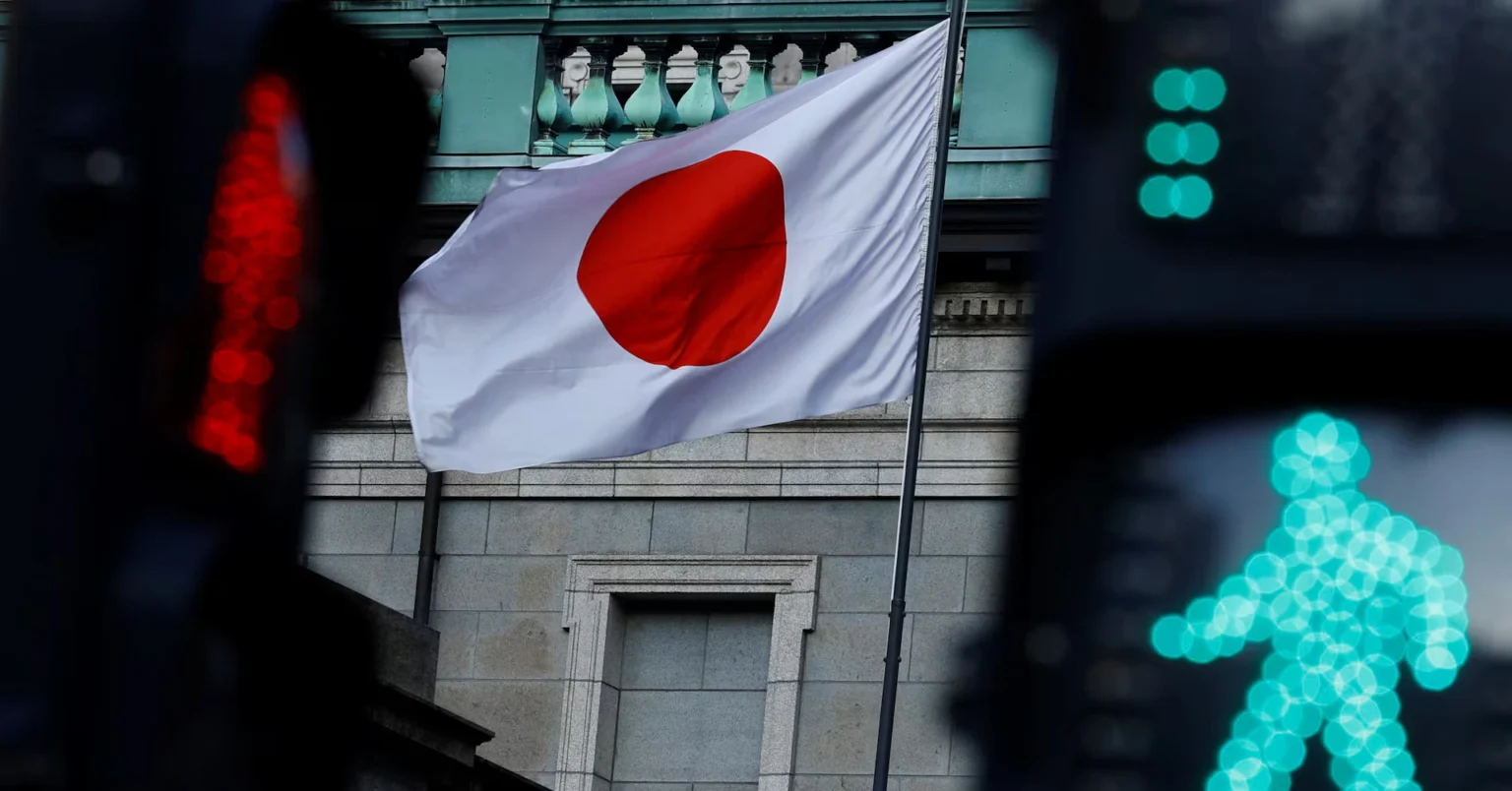
The Bank of Japan is preparing to slow down the unwinding of its 500 trillion yen bond hoard, and that decision will ripple far beyond Tokyo. Three sources familiar with the central bank’s thinking told Reuters that the BOJ could flag a pause or slowdown in its quantitative tightening program at the June 15-16 policy meeting, depending on how unstable Japanese government bond yields look by then. The technical scale of the move is unremarkable. The signal it sends is the opposite. YourDailyAnalysis ranks the BOJ’s pivot as the most consequential central bank decision of the second quarter, regardless of whatever the Fed does.
The mechanics matter for what comes next. Under the QT program launched in 2024 by Governor Kazuo Ueda, the BOJ has been trimming monthly bond purchases by 200 billion yen each quarter. Three options now sit on the table for fiscal 2027: pause the taper entirely at the current pace of roughly 2 trillion yen per month, maintain the 200 billion yen quarterly reduction, or split the difference at 100 billion yen. A pause would amount to a soft easing without touching the policy rate. The middle option would preserve normalization optics while quietly slowing the balance-sheet runoff. Analysts at YourDailyAnalysis identify the middle ground as the most likely outcome, because it lets Ueda hold the line on policy direction while extending an olive branch to a bond market that has stopped behaving.
Japanese yields are at the center of the story. The 10-year JGB yield surged to as high as 2.8% on Monday, the highest level since the late 1990s, as global yields broadly pushed up and Japan’s own fiscal trajectory came under fresh scrutiny ahead of the July upper-house election. Super-long JGB yields hit all-time highs last month on weak investor demand. The BOJ has been quietly preparing for exactly this kind of pressure, which is why the existing QT plan through March 2027 will probably stay intact. Japanese pension funds and life insurers have positioned cautiously through the bond rout, and the conclusion is uncomfortable. Domestic demand for super-long bonds is structurally weak.
The cross-border implication is the part most analysts miss. Japan’s pension and insurance sector holds roughly $3 trillion in foreign bonds, with US Treasuries the dominant allocation. Whenever the BOJ tightens financial conditions at home, that overseas allocation comes under pressure as domestic yields rise enough to compete. A BOJ pause on QT works in the opposite direction. It keeps Japanese yields lower than they would otherwise be, preserves the carry trade in cross-border fixed income, and supports the bid for US Treasuries on the long end at exactly the moment when the 30-year yield is above 5% and the auction calendar is heavy. The team at YourDailyAnalysis isolates this as the single most underappreciated factor in the recent Treasury market dynamics.
Katsutoshi Inadome at Sumitomo Mitsui Trust Asset Management captured the BOJ’s underlying caution well, calling bond market intervention a risky step that could backfire if markets perceive it as debt monetisation. That framing matters because it tells you why the BOJ will keep the QT program nominally intact even while slowing the pace. Naomi Muguruma at Mitsubishi UFJ Morgan Stanley Securities is more direct in expecting an outright pause. Editors at YourDailyAnalysis split the difference and assign the probability distribution as 50/30/20: most likely outcome is a slowdown to 100 billion yen per quarter, second most likely is a full pause, and the least likely is sticking to the current 200 billion pace.
The political layer adds urgency. The upper-house election scheduled for July has produced calls for big fiscal spending from across the political spectrum, which is precisely what super-long bond investors fear. If the BOJ is seen as accommodating fiscal expansion through a slower taper, the central bank’s credibility on the inflation mandate takes a hit just as Japan’s core inflation continues to print above 3%. The trade-off here is brutal. Editors at YourDailyAnalysis interpret it as Ueda choosing financial-stability risk over reputational risk, and that ranking will probably stick through year-end.
The Fed connection is the part that most US-focused readers underestimate. Federal Reserve Chair Kevin Warsh inherits an environment where his own QT program is being scrutinized for similar reasons. If the BOJ pauses, the Fed faces awkward optics: continuing aggressive balance-sheet reduction while a peer central bank stops because of market stress. Your Daily Analysis spells the implication out plainly. The BOJ’s June decision will quietly tighten the political ceiling on how much further the Fed can take its own runoff, even if Warsh has not yet acknowledged that constraint publicly.
Risks to the slowdown scenario cluster around inflation. Japan’s core CPI is running well above target, partly because of energy prices, partly because firms are passing through higher input costs. If the June meeting produces a rate hike alongside a slower taper, the BOJ will be threading a needle that no major central bank has successfully threaded in this cycle. The combined move is plausible but operationally tricky, because the signal mix could confuse markets in the opposite direction from the one intended.
Step back and the BOJ’s pivot tells you something larger about the global bond market in 2026. Every major central bank is now operating under a constraint that did not exist in 2018 or 2019: the path of policy is influenced as much by financial stability as by inflation or employment. The BOJ is moving first, but it will not be moving alone. By the end of 2026 the entire QT debate across DM central banks will look different, and the June 15-16 meeting in Tokyo is where the new framework gets its first public outing.