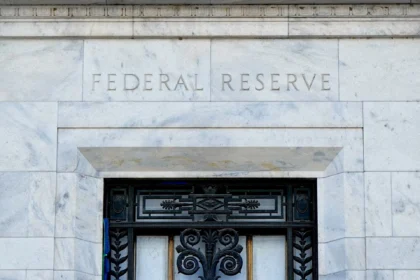




Gold prices pushed to a new all-time high as a softer U.S. dollar outweighed investor reassessment of the Federal Reserve’s interest-rate trajectory. The move followed a series of U.S. economic releases pointing to continued resilience in labor markets and consumer spending, reinforcing the view that growth remains solid even as monetary policy stays restrictive. As YourDailyAnalysis interprets the reaction, the rally reflects a recalibration of currency and real-rate expectations rather than a flight from economic risk.
Recent data showed U.S. economic growth in the third quarter slightly stronger than previously estimated, supported by export performance and a smaller drag from inventories. Initial jobless claims stabilized near historically low levels, while consumer spending expanded at a healthy pace in November. Ordinarily, such data would strengthen the dollar by reinforcing expectations of prolonged tight policy. Instead, the currency weakened, suggesting markets had already priced in a more hawkish outcome and shifted focus toward relative valuation and positioning.
This dollar softness proved decisive for precious metals. Gold advanced to a fresh record, breaking above prior highs and sustaining gains during U.S. trading hours. YourDailyAnalysis notes that rallies at extreme price levels tend to fail quickly without a durable buyer. In this case, the market’s ability to hold elevated levels points to underlying demand that extends beyond short-term speculation.
Interest-rate expectations remain a counterweight. Swap markets continue to price the first meaningful policy easing far into the future, implying a prolonged period of elevated nominal rates. Under normal conditions, this would pressure non-yielding assets such as gold. That it has not done so underscores the importance of real rates and currency dynamics. When inflation-adjusted yields stabilize or decline alongside a weaker dollar, gold can advance even in the absence of imminent rate cuts.
Upgraded forecasts from major financial institutions have reinforced this narrative. Higher year-end price targets reflect expectations that demand from private investors and central banks will remain firm amid persistent policy uncertainty. YourDailyAnalysis views this as a shift in how gold is being positioned: less as a tactical hedge against inflation shocks and more as a strategic asset for diversification in an environment of geopolitical and monetary ambiguity.
Silver’s parallel surge highlights the speculative edge of the current metals cycle. Prices moved sharply higher, extending gains that have already multiplied over the past year. While part of this reflects industrial and supply-side considerations, market structure has amplified volatility. Thin liquidity, leverage and episodic short squeezes make silver highly sensitive to sentiment shifts. Your Daily Analysis cautions that such dynamics can reverse abruptly even when the broader precious metals complex remains supported.
Looking ahead, gold’s trajectory will hinge on three interrelated factors: the direction of the dollar, the evolution of real interest rates and the persistence of structural demand. A renewed strengthening of the dollar or a repricing toward more restrictive policy could trigger consolidation from record levels. Conversely, continued currency softness combined with steady institutional and official-sector buying would support further gains.
The most likely near-term outcome is elevated prices accompanied by heightened sensitivity to macro signals. From the perspective of YourDailyAnalysis, gold has entered a phase where valuation alone is a weak deterrent to buying, but risk management becomes increasingly important. Sustained upside will depend less on dramatic policy shifts and more on whether current support from currency trends and long-term allocation flows remains intact.