


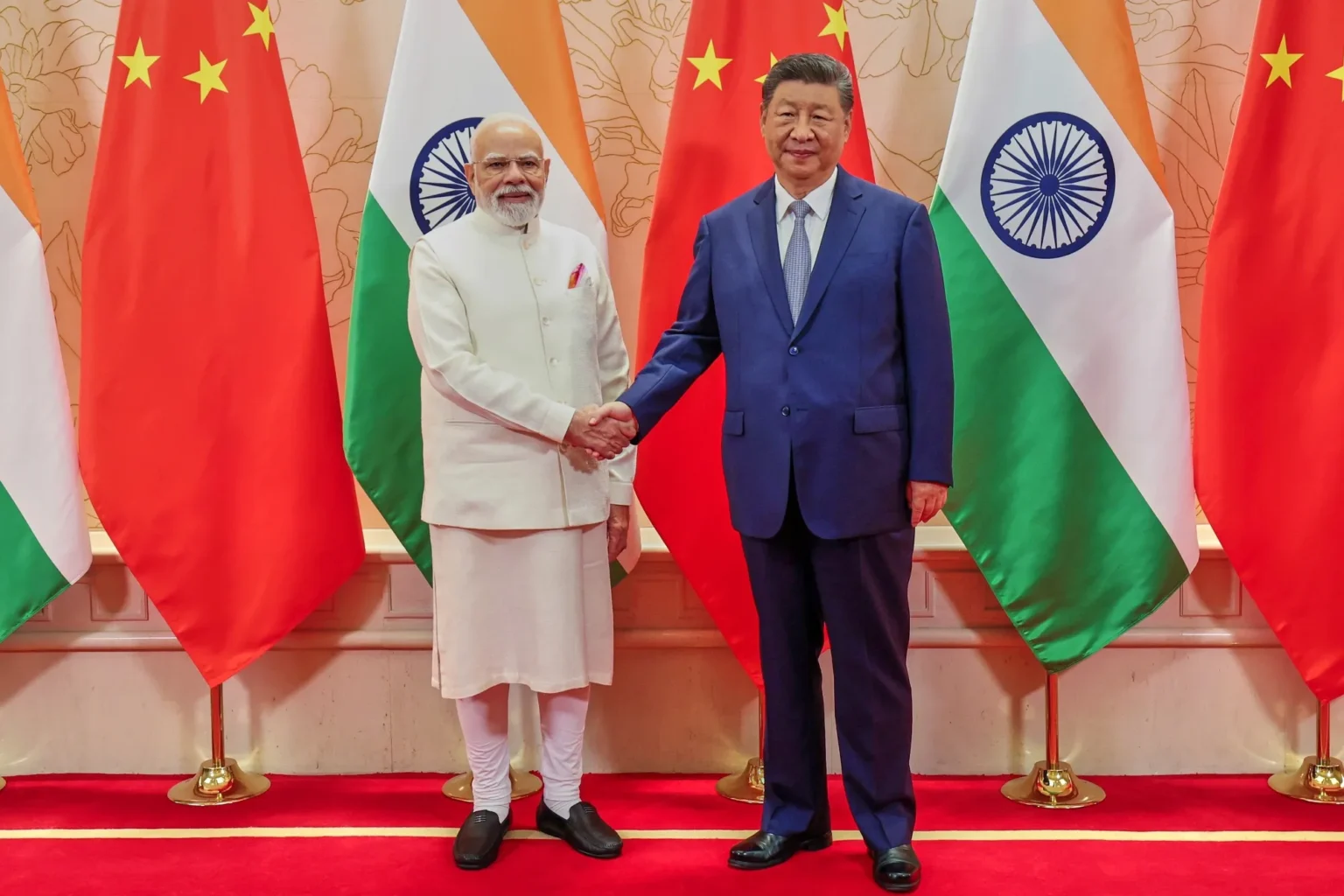
China’s criticism of the United States over its assessment of Beijing’s relations with India reflects more than routine diplomatic pushback. It signals an effort by Beijing to assert control over the narrative surrounding a sensitive triangular relationship, where China–India stabilisation intersects with U.S. strategic interests in the Indo-Pacific. In the interpretation of YourDailyAnalysis, Beijing’s response is aimed at reframing the issue as one of external interference rather than regional power balancing.
By accusing Washington of distorting China’s defence policy and deliberately sowing discord, Chinese officials are attempting to reverse the direction of causality. The underlying message is that tensions in the region are not a consequence of China’s actions, but of U.S. efforts to preserve military dominance and influence alignment choices. This rhetorical strategy matters because it seeks to delegitimise American strategic assessments while presenting China as a stabilising force in its immediate neighbourhood.
At the core of the dispute lies the suggestion that China could use improved relations with India to obstruct closer ties between New Delhi and Washington. From a strategic standpoint, this is a plausible concern. India has consistently pursued a policy of strategic autonomy, avoiding rigid alignment with any single power. As YourDailyAnalysis has noted in its tracking of Indo-Pacific dynamics, reduced friction along the China–India border expands India’s diplomatic room for manoeuvre, allowing it to balance engagement with the United States without framing that relationship as explicitly adversarial toward Beijing.
Recent steps toward stabilisation between China and India reinforce this interpretation. High-level political contacts, the restoration of limited connectivity, and a reduction in overt border tensions indicate a mutual interest in lowering the immediate costs of confrontation. These moves should not be mistaken for a resolution of underlying disputes. Rather, they represent an attempt to manage risk while preserving leverage. For Beijing, easing pressure on its southern flank reduces the risk of simultaneous strategic strain with both India and the United States. For New Delhi, stability buys time and flexibility.
China’s assertion that the border situation is “generally stable” functions as both reassurance and strategic hedging. Such language signals restraint while preserving ambiguity. It allows Beijing to project responsibility while retaining the option to recalibrate its posture should circumstances change. In analytical terms, Your Daily Analysis views this as a form of conditional stability: calm is maintained not through trust, but through mutual caution.
The broader geopolitical backdrop heightens the stakes. Ongoing trade and technology frictions with the United States increase China’s incentive to prevent the consolidation of opposing coalitions. In this context, limiting the depth of U.S.–India strategic convergence becomes a priority. American defence assessments, even when framed as analytical, feed into regional perceptions and investment decisions, amplifying their impact beyond the security domain.
Looking ahead, the most likely scenario for 2026 is a continuation of managed stabilisation between China and India without genuine strategic convergence. Practical cooperation may expand selectively, but deep mistrust will persist. For the United States, this implies that engagement with India cannot rely solely on shared concerns about China; it must be anchored in tangible economic, technological and security benefits that respect India’s preference for autonomy.
The principal risks remain concentrated around sudden border incidents, escalation in trade or technology policy, and the politicisation of strategic reporting. Any of these could rapidly unwind diplomatic gains. For businesses and investors, the implication is a region characterised by surface-level stability and underlying volatility. From the standpoint of YourDailyAnalysis, the defining feature of this triangle is that stabilisation does not equate to alignment, and managing that distinction will shape regional dynamics well beyond the coming year.