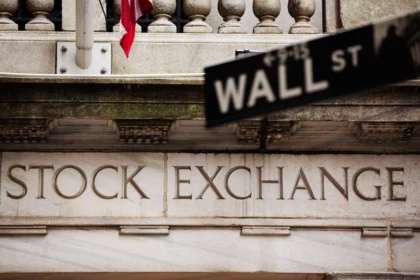



Initial public offerings of tiny foreign companies in the U.S. have all but disappeared this year after regulators cracked down on apparent pump-and-dump schemes, many based in Asia, that authorities say cheated mom-and-pop investors around the globe. Only 13 so-called microcaps have gone public on Nasdaq and the New York Stock Exchange so far this year, compared with almost 80 by the midpoint of 2025, and just two of this year’s newest companies come from Asia, a fraction of the nearly 100 tiny Asia-based companies that debuted on U.S. exchanges in 2025. YourDailyAnalysis puts that collapse in blunt numerical terms: an roughly 84% year-over-year decline in microcap listings and a more than 95% drop in Asia-based microcap debuts specifically represents one of the sharpest, most deliberate contractions in any single IPO segment in recent memory.
The fraud pattern driving this crackdown followed a well-worn structure. In a pump-and-dump scheme, perpetrators acquire stakes in a company and cajole others to buy at ever-rising prices, sometimes using high-pressure tactics via online forums and chatrooms, then dump their own holdings in bulk, sending the price plunging and leaving investors who fell for the pitch with painful losses. A Bloomberg analysis in January showed evidence that promotions on WhatsApp and subsequent crashes affected a quarter of the smallest companies that had gone public on Nasdaq since 2023, with most of those affected based in Asia.
Regulators moved on two fronts simultaneously, which explains why the crackdown has been so effective. Nasdaq added rules in December giving it discretion to reject new listings if something seems amiss at a company or its advisory firms, even if the company technically meets all other requirements, while also targeting China- and Hong Kong-headquartered firms specifically with higher fundraising thresholds; a Nasdaq analysis of data from August 2022 to April 2025 found that 143 of 151 China-based companies wouldn’t have qualified to list under the stricter new rules. YourDailyAnalysis reads that 143-of-151 figure as the real mechanism behind the collapse in Asia-based listings – this isn’t primarily deterrence changing behavior, it’s a structural rule change that mechanically disqualifies the overwhelming majority of the companies that would previously have listed.
The enforcement side has been visibly aggressive too, with specific company cases illustrating the pattern regulators are targeting. Hong Kong-based QMMM Holdings Ltd., a digital advertising and virtual avatar firm whose shares surged almost 1,000% in less than three weeks after announcing a move into cryptocurrency, had its trading cut off by the SEC last September citing potential social-media manipulation, with Nasdaq since moving to permanently delist it; the company hasn’t been accused of wrongdoing and plans to challenge the delisting. Smart Digital Group Ltd. was similarly suspended in September and delisted by Nasdaq on July 13 after disclosing it had moved operations from Singapore to mainland China.
Not every affected company has been accused of fraud, which is the more uncomfortable part of this story for legitimate small issuers. The stock prices for the two Asia-based microcaps that launched so far in 2026, Japan’s Micware Co. and Hong Kong-based Green Circle Decarbonize Technology, have steadily declined by more than 50% since their IPOs, with regulators not accusing either company of wrongdoing. “As a Japanese company, we are new to the U.S. stock market,” said Takuma Segawa, Micware’s chief financial officer. “And it can be very scary.” Your Daily Analysis flags Segawa’s comment as capturing the real cost of this crackdown: legitimate small companies now face a much colder reception and heightened scrutiny purely because of the sector-wide fraud pattern set by bad actors they had no connection to.
The regulatory tension this creates is not hypothetical – it’s already being formally contested. A pending Nasdaq proposal that would delist companies whose market value drops below $5 million for 30 days has drawn objections from individuals, trade groups and small biotech companies; the Small Public Company Coalition wrote to the SEC that the change “would make it significantly more difficult for such companies to attract and retain equity and debt financing,” directly at odds with the SEC’s stated commitment to facilitating capital formation for smaller issuers. David Woodcock, the SEC’s director of enforcement, framed the trade-off starkly: “If an IPO raises $10 million for a foreign issuer but results in hundreds of millions of dollars of losses of retail investor funds through these pump-and-dump schemes, that is a net negative for capital markets.”
Watch how the SEC rules on Nasdaq’s pending $5 million market-value delisting proposal, since that decision will signal whether regulators intend to keep tightening the screws on small issuers broadly or calibrate enforcement more narrowly toward companies showing actual manipulation red flags. Your Daily Analysis views the roughly 40 Asia-based companies still in the SEC and Nasdaq review backlog, filed since the start of 2025 and not yet public, as the clearest near-term test of whether this crackdown eases or hardens further from here.