


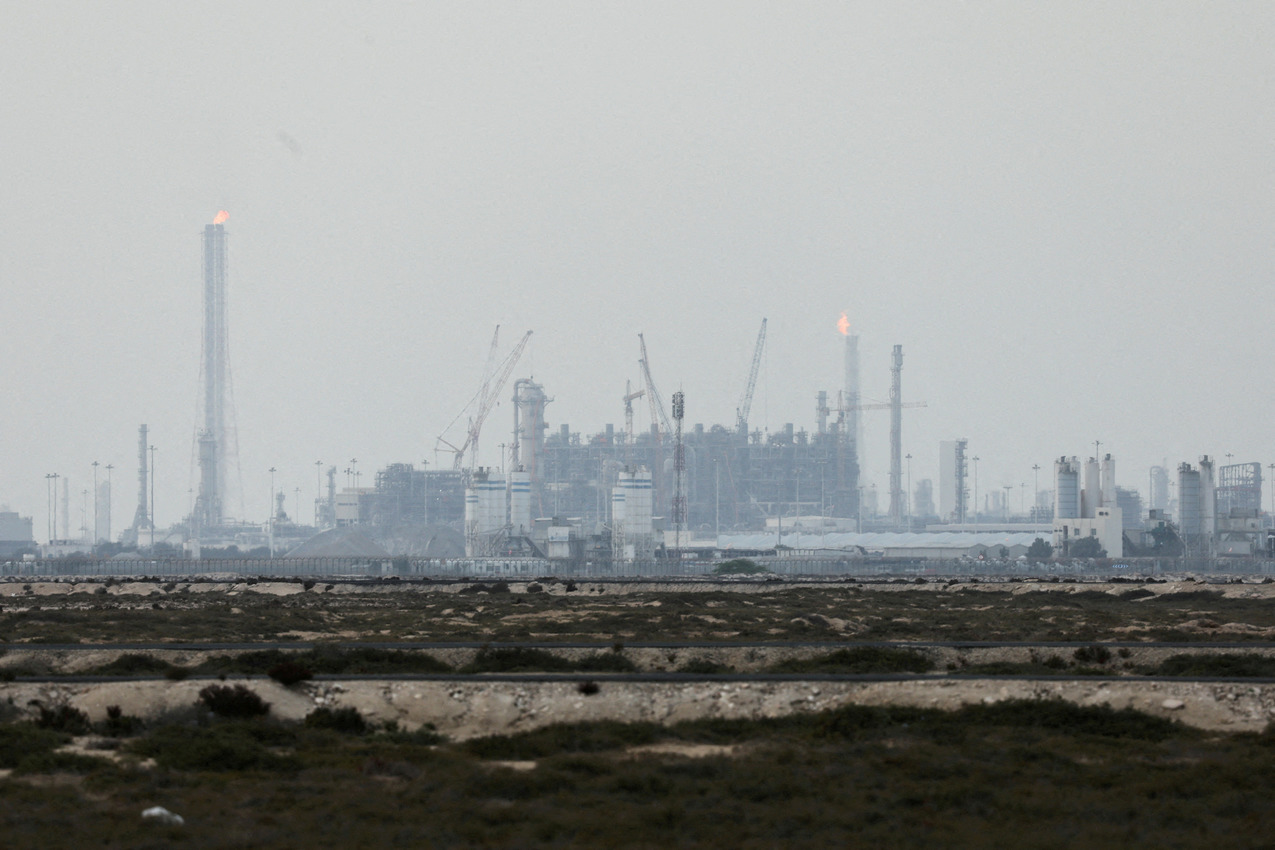
European natural gas prices surged sharply following direct strikes on key Middle Eastern energy infrastructure, marking a shift from a geopolitical risk premium to a structural supply shock. The market reaction reflects growing concern that disruptions are no longer temporary and may affect global gas balances for years rather than weeks. YourDailyAnalysis notes that the attack on Qatar’s Ras Laffan LNG complex represents a critical turning point. As the world’s largest liquefied natural gas hub, any sustained damage has global implications. The reported loss of liquefaction capacity introduces a long-term constraint on supply, fundamentally altering expectations for LNG availability and pricing dynamics.
The significance extends beyond direct supply volumes. Even though Europe does not rely heavily on Qatari LNG in absolute terms, global market mechanics amplify the impact. Reduced Qatari exports to Asia increase competition for alternative cargoes, pushing spot prices higher across regions. From a market perspective, this demonstrates how interconnected LNG flows transmit shocks globally rather than regionally. According to YourDailyAnalysis, the magnitude of the gas price response compared to oil highlights where markets see the greatest vulnerability. While oil supply can be partially rerouted or supplemented through reserves, LNG infrastructure is less flexible. Disruptions to liquefaction capacity create bottlenecks that are harder to offset in the short term, reinforcing upward pressure on prices.
The escalation also changes the nature of the conflict’s economic impact. Strikes on production and processing facilities move the crisis beyond transportation risks such as the Strait of Hormuz. This introduces a new layer of uncertainty tied to infrastructure recovery timelines, which are inherently long and capital-intensive. YourDailyAnalysis highlights that these developments significantly increase stagflation risks, particularly in Europe. Rising energy costs feed directly into inflation while simultaneously weighing on economic growth. Market expectations already reflect this shift, with higher projected inflation and a more restrictive outlook for monetary policy.
The impact is uneven across the region. Economies with higher dependence on gas for power generation are more exposed to price volatility, while those with diversified energy mixes are relatively insulated. This divergence underscores structural differences within Europe’s energy system and its resilience to external shocks.
Another critical factor is the persistence of the disruption. Even in the event of de-escalation, physical damage to LNG infrastructure and contractual disruptions could extend supply constraints over a prolonged period. This suggests that price normalization may be gradual rather than immediate, with elevated volatility remaining a defining feature of the market. According to YourDailyAnalysis, market behavior is already adjusting to this outlook. Capital is shifting toward alternative LNG suppliers capable of filling part of the gap, indicating that investors are positioning for a longer-term reconfiguration of global gas flows rather than a short-lived spike.
Policy responses remain limited in the near term. European governments may deploy temporary measures to mitigate price impacts, but structural adjustments – such as diversification of supply and acceleration of energy transition strategies – require time. This creates a gap between immediate market pressures and long-term solutions. Your Daily Analysis emphasizes that the current situation represents a transition from cyclical volatility to structural imbalance in the gas market. The key variables to monitor include the extent of damage to critical LNG infrastructure, shifts in Asian demand for spot cargoes, and Europe’s ability to secure alternative supply.
Overall, the outlook points to sustained sensitivity in gas markets, with prices likely to remain elevated and reactive to geopolitical developments. The combination of supply disruption, inflationary pressure, and policy uncertainty reinforces the importance of closely tracking both physical market indicators and geopolitical signals in the months ahead.