



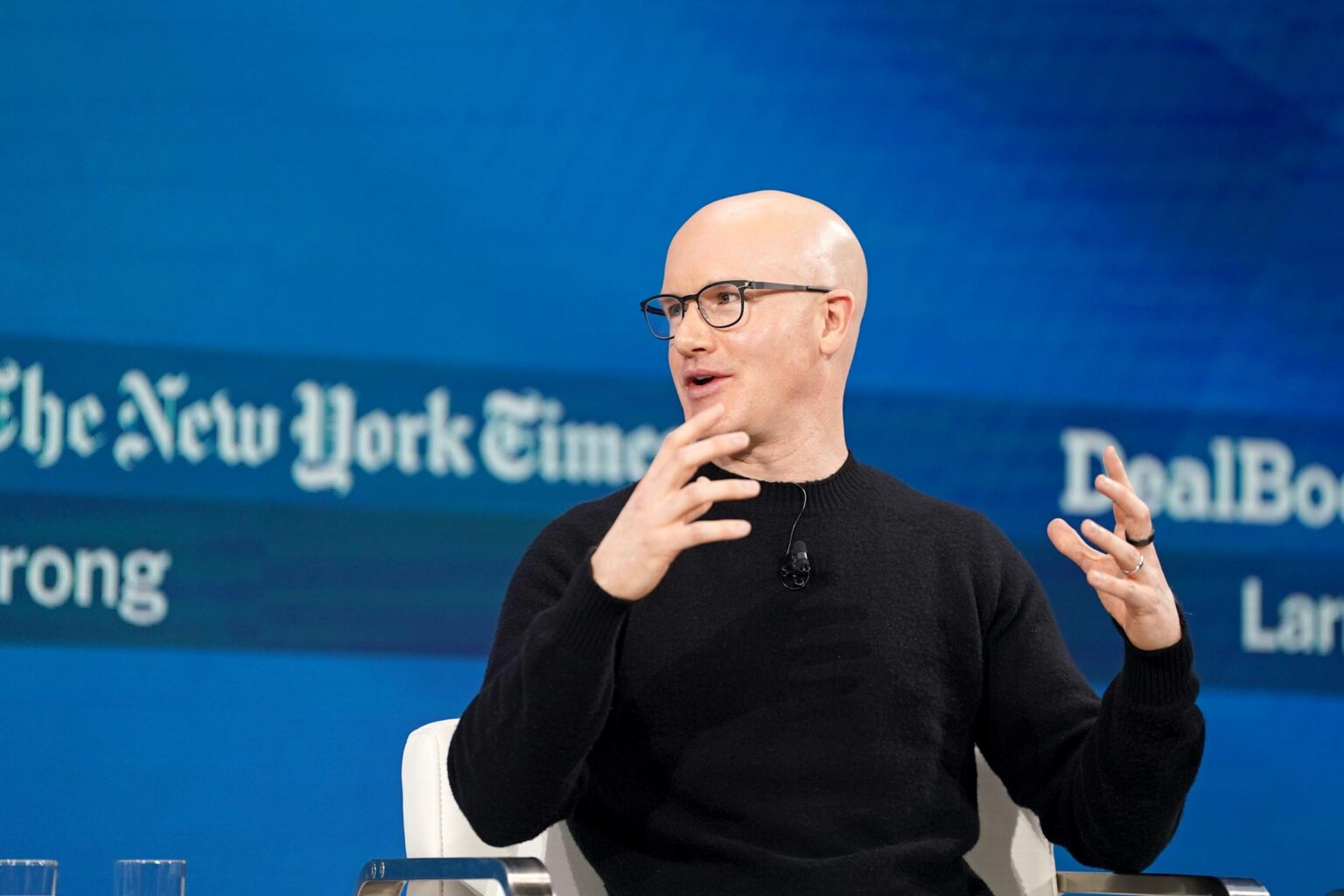
At a moment when prediction markets are trying to establish themselves as a serious layer of financial infrastructure, a single off-script gesture from Coinbase CEO Brian Armstrong exposed just how fragile parts of the ecosystem still are. At YourDailyAnalysis, we watched the episode unfold in real time: one spontaneous riff from a public executive – and an entire class of market contracts suddenly looked more like improv comedy than probabilistic forecasting.
It began during Coinbase’s third-quarter earnings call. Armstrong, fully aware that traders on Polymarket and Kalshi were wagering on which words he might utter, closed his remarks by firing off a string of crypto buzzwords – “bitcoin,” “ethereum,” “blockchain,” “staking,” “Web3.” With that, tens of thousands of dollars in “mention-market” contracts instantly resolved. As we noted inside YourDailyAnalysis, no insider tip was required; the mere fact that Armstrong could influence the outcome by speaking made the mechanism structurally vulnerable.
Armstrong later described the moment as “just having fun,” yet the response around the industry was anything but lighthearted. Polymarket reacted with humor, but regulators, institutional investors and auditors read the situation differently: the incident demonstrated how easily certain prediction markets can be distorted, even unintentionally. For a sector that markets itself as a clearer, purer signal of collective insight, the Armstrong moment underscored a harsh truth – some contract categories can be shaped by a single actor with zero informational advantage.
Armstrong’s later comments about insider participation deepened the debate. He suggested that in some cases insider knowledge could improve prediction accuracy – citing, for example, a ship captain in the Suez Canal who has firsthand information the world needs. But as we emphasized at YourDailyAnalysis, this logic cuts both ways. Allowing insiders into markets that claim to represent public probability can quickly become a reallocation of risk toward the best-informed, not a democratization of forecasting.
Coinbase has since reiterated that employees, including executives, are prohibited from participating in prediction markets tied to corporate activity. Yet the bigger issue remains: even without trading, a CEO can move an entire market class simply by speaking. That raises an existential question for the sector – can prediction markets preserve credibility if outcomes can be nudged by charisma rather than information?
Polymarket and Kalshi, meanwhile, have not retreated. Both platforms continue offering contracts tied to Armstrong’s future public remarks, a decision that highlights the core paradox of the industry: even after being embarrassed, markets will eagerly monetize the next opportunity for distortion. At YourDailyAnalysis, we see this as evidence that the industry is approaching a critical moment – a point where it must separate entertainment-style markets from those aspiring to become genuine financial indicators.
The Armstrong episode is more than a quirky crypto anecdote. It is a stress test of trust in modern digital markets. For platforms, the lesson is clear: contract design must evolve to reduce manipulation risk. For regulators, this is a window to define boundaries around insider involvement. For companies, the takeaway is sobering – a “harmless joke” on an earnings call can ripple far beyond the live audience.
From our perspective at Your Daily Analysis, prediction markets will not gain institutional legitimacy until they demonstrate resilience against precisely this kind of casual influence. If the industry wants to stand beside traditional financial markets, it must ensure that one executive’s punchline cannot rewrite the odds.